
Concrete sawing and drilling isn’t ordinary construction work.
Your crews may be cutting structural concrete, core drilling through walls and floors, operating powerful saws, working around heavy materials, transporting specialized equipment, or performing precision cuts where a mistake could damage much more than the concrete itself.
Those risks make insurance for concrete sawing and drilling contractors more specialized than many business owners realize.
A basic commercial insurance policy may not address every exposure created by your actual operations.
Depending on the business, a concrete cutting contractor may need to consider:
- General liability insurance
- Workers’ compensation insurance
- Contractors pollution liability
- Commercial auto insurance
- Property and equipment coverage
- Excess liability
- Surety bonds
The right combination depends on what your company actually does.
A contractor primarily performing slab sawing may have different exposures than a company doing core drilling, wall sawing, wire sawing, selective demolition, grooving and grinding, or other specialty concrete work.
That’s why the first question shouldn’t simply be:
“How much does concrete contractor insurance cost?”
A better place to start is:
“What risks does my concrete sawing and drilling business actually need to insure?”
What You’ll Learn
- What insurance concrete sawing and drilling contractors may need
- Why general liability is important for concrete cutting businesses
- How completed operations coverage can matter
- When contractors pollution liability should be considered
- Why workers’ compensation is especially important in this trade
- How commercial auto insurance may apply
- How to protect expensive concrete cutting and drilling equipment
- When excess liability may be appropriate
- What surety bonds do
- What insurance underwriters may want to know about your concrete cutting business
- Why subcontracting, experience, loss history, and operations can affect insurability
- What to prepare before requesting a concrete contractor insurance quote
Why Is Concrete Sawing and Drilling Insurance So Specialized?
Concrete sawing and drilling combines several different types of risk.
There’s the obvious risk to employees operating powerful equipment.
But there’s also potential damage to the property you’re working on.
A core drill isn’t being used in an empty field.
You may be cutting or drilling through an existing structure containing:
- Electrical systems
- Plumbing
- Gas lines
- Reinforcing steel
- Post-tension systems
- Communication lines
- Other utilities or structural components
Then there’s the equipment itself.
Professional concrete saws, drilling equipment, generators, vacuums, trailers, vehicles, and related tools can represent a significant investment.
And depending on the work being performed, there may also be environmental or pollution exposures.
That’s why insurance for a concrete sawing contractor often involves more than one policy.
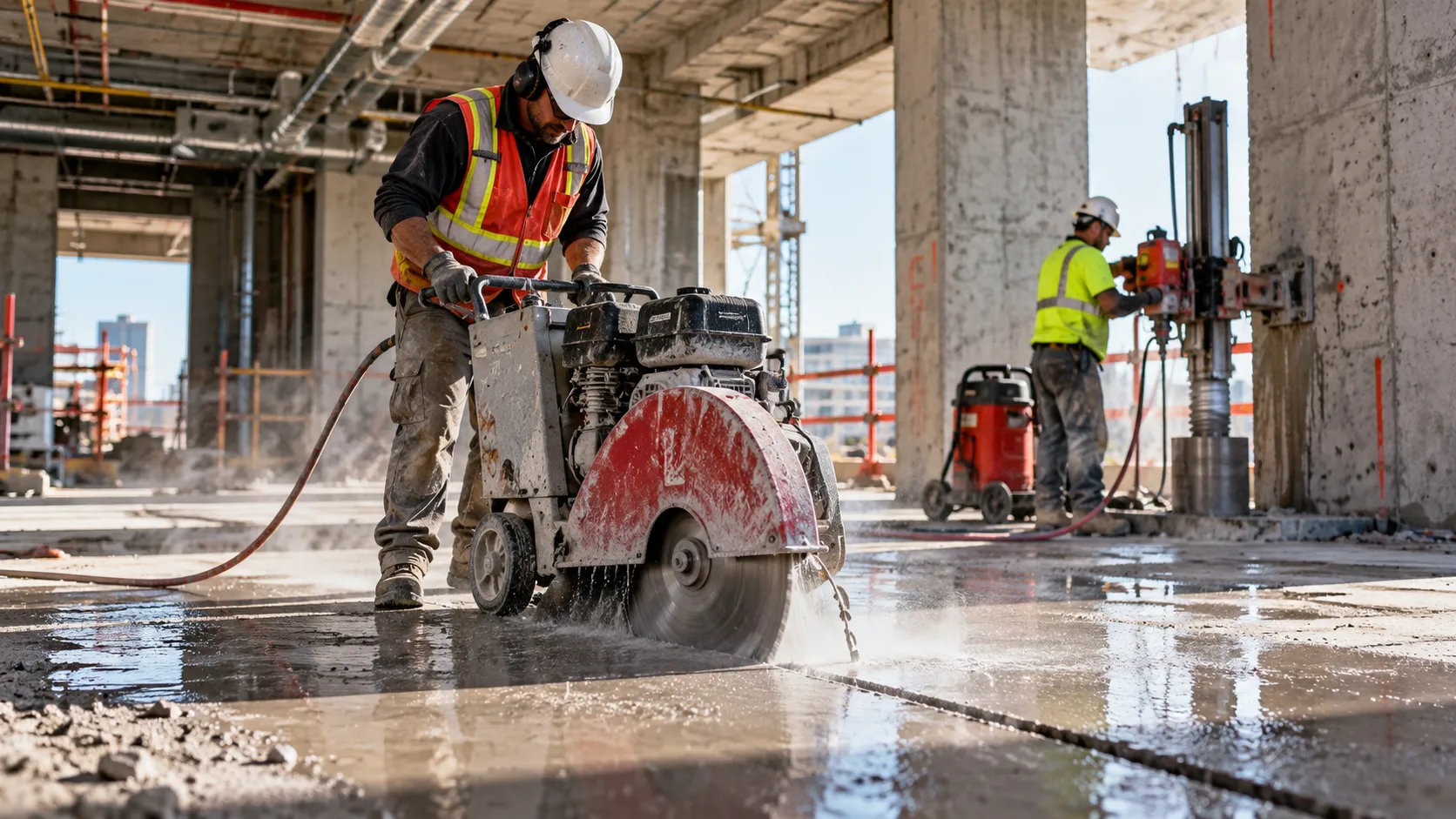
1. General Liability Insurance for Concrete Sawing and Drilling Contractors
Commercial general liability is one of the foundational coverages for many concrete cutting and drilling businesses.
It may respond to certain covered claims involving third-party bodily injury or property damage arising from your operations, subject to the policy’s terms, conditions, limitations, and exclusions.
Consider the environment in which concrete cutting takes place.
Your crew may be working inside:
A commercial building.
A warehouse.
A parking structure.
An industrial facility.
A school.
A hospital.
A construction project.
An occupied property.
You’re performing work that can potentially affect the surrounding structure and other people on the jobsite.
That creates liability exposure.
What Could Go Wrong During Concrete Cutting?
Imagine you’re core drilling through a concrete floor.
The hole needs to be precisely located.
But there’s something inside or beneath that slab that wasn’t anticipated.
Or imagine a wall-sawing operation where surrounding property is accidentally damaged.
Or a third party is injured near the work area.
Those are the types of situations that demonstrate why concrete cutting contractor insurance needs to reflect the actual work being performed.
The exact response of any insurance policy depends on the specific circumstances and policy language.
General Liability Isn’t Just About Accidents During the Job
Concrete sawing contractors should also understand completed operations exposure.
A problem doesn’t always become apparent while your crew is still on the job.
Something associated with completed work could potentially result in a claim later.
That’s why contractors should understand how their general liability coverage addresses both ongoing and completed operations.
Contract Requirements Matter Too
Commercial contractors frequently encounter insurance requirements written into their contracts.
Those requirements may include provisions involving:
- Additional insured status
- Primary and noncontributory wording
- Waiver of subrogation
- Specific liability limits
- Per-project aggregates
- Completed operations
Don’t assume that having a certificate of insurance automatically means every contractual insurance requirement has been satisfied.
Your broker or insurance professional should review what the contract requires and compare it with the coverage actually available.
2. Workers’ Compensation Insurance
Concrete cutting is physical work.
Employees may be operating saws, drills, heavy equipment, generators, vacuums, hoses, and other tools in active construction environments.
Potential workplace exposures can include:
- Cuts and lacerations
- Strains
- Falls
- Equipment-related injuries
- Noise
- Flying debris
- Heavy lifting
- Dust exposure
- Repetitive physical stress
Workers’ compensation is designed to address covered work-related employee injuries and illnesses, subject to applicable laws and policy terms.
Requirements vary by jurisdiction, but contractors with employees should pay particularly close attention to workers’ compensation obligations.
Concrete Dust Deserves Special Attention
Cutting, drilling, grinding, and otherwise disturbing concrete can generate dust.
That makes proper safety procedures important independently of insurance.
Insurance shouldn’t be viewed as a replacement for:
- Proper equipment
- Appropriate dust-control procedures
- Employee training
- Personal protective equipment
- Applicable workplace-safety requirements
A strong safety program can protect employees while also presenting the business more favorably to an insurance underwriter.
Your Safety Program Can Affect More Than Safety
When an underwriter evaluates a concrete sawing and drilling contractor, they’re trying to understand risk.
Two companies with the same annual revenue aren’t necessarily the same risk.
One may have:
Documented safety procedures.
Experienced employees.
Good loss history.
Well-maintained equipment.
Strong jobsite controls.
Another may not.
Insurance underwriting can involve much more than simply asking:
“How much revenue do you have?”
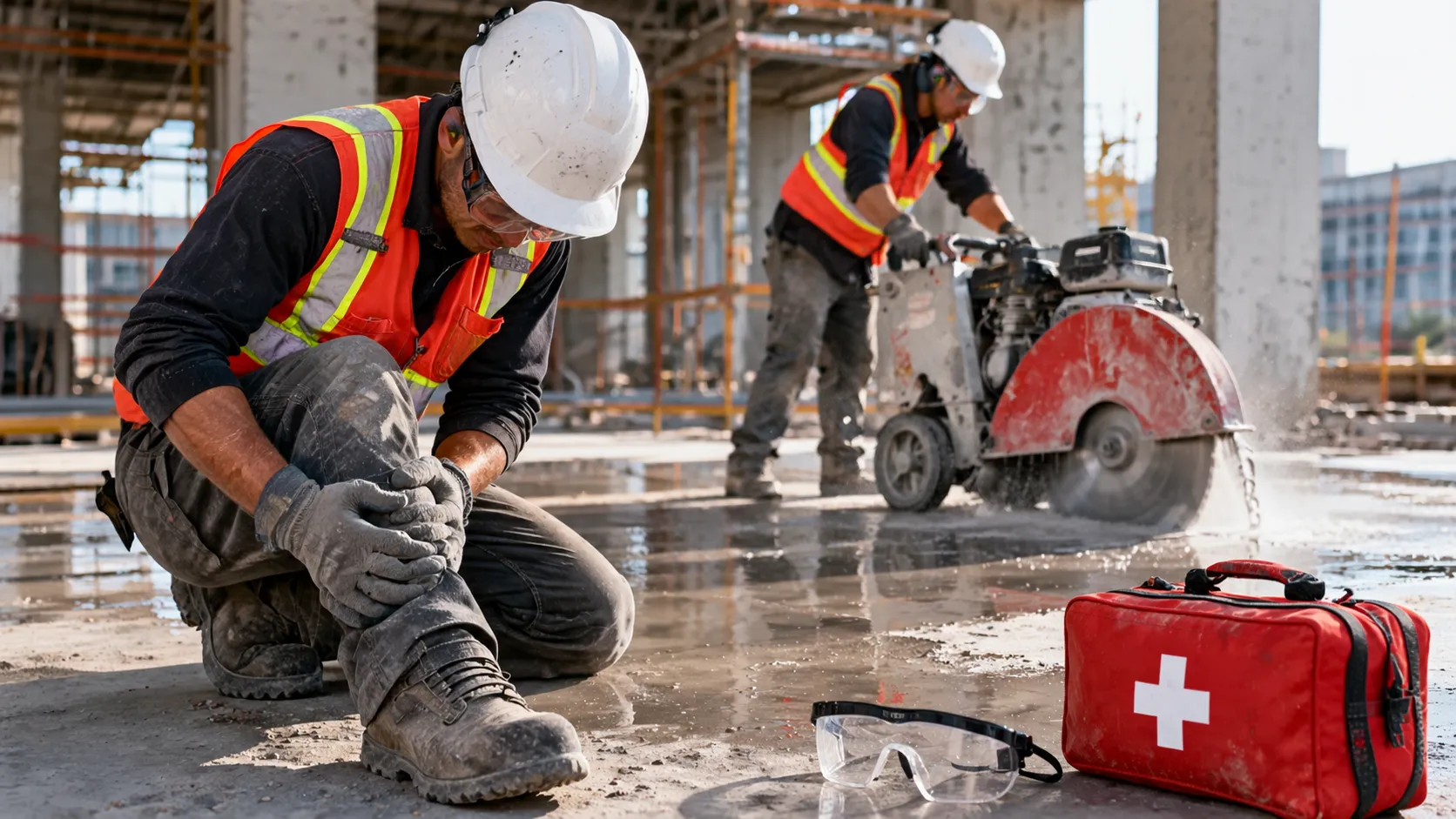
3. Contractors Pollution Liability
Pollution insurance may not be the first coverage a concrete contractor thinks about.
But it’s worth discussing.
Concrete sawing, cutting, drilling, grinding, and related operations can involve:
- Dust
- Slurry
- Waste material
- Fuels
- Oils
- Other substances associated with equipment or jobsites
General liability policies may contain pollution exclusions or limitations.
That means a contractor shouldn’t simply assume that every environmental claim would automatically fall under general liability.
What Is Contractors Pollution Liability?
Contractors pollution liability is designed to address certain pollution-related exposures arising from contracting operations, subject to the specific policy.
Depending on the policy and circumstances, coverage may address certain claims involving pollution conditions, cleanup costs, bodily injury, or property damage.
Because policy language varies, contractors should discuss their actual operations with an insurance professional rather than assuming pollution coverage is included elsewhere.
Does Every Concrete Cutting Contractor Need Pollution Insurance?
Not necessarily in exactly the same form.
That’s why underwriting matters.
Consider:
Where do you work?
What materials do you encounter?
How do you manage concrete slurry?
Do you perform work in environmentally sensitive locations?
What contracts are you accepting?
What does your general liability policy exclude?
Your insurance program should be built around the answers.
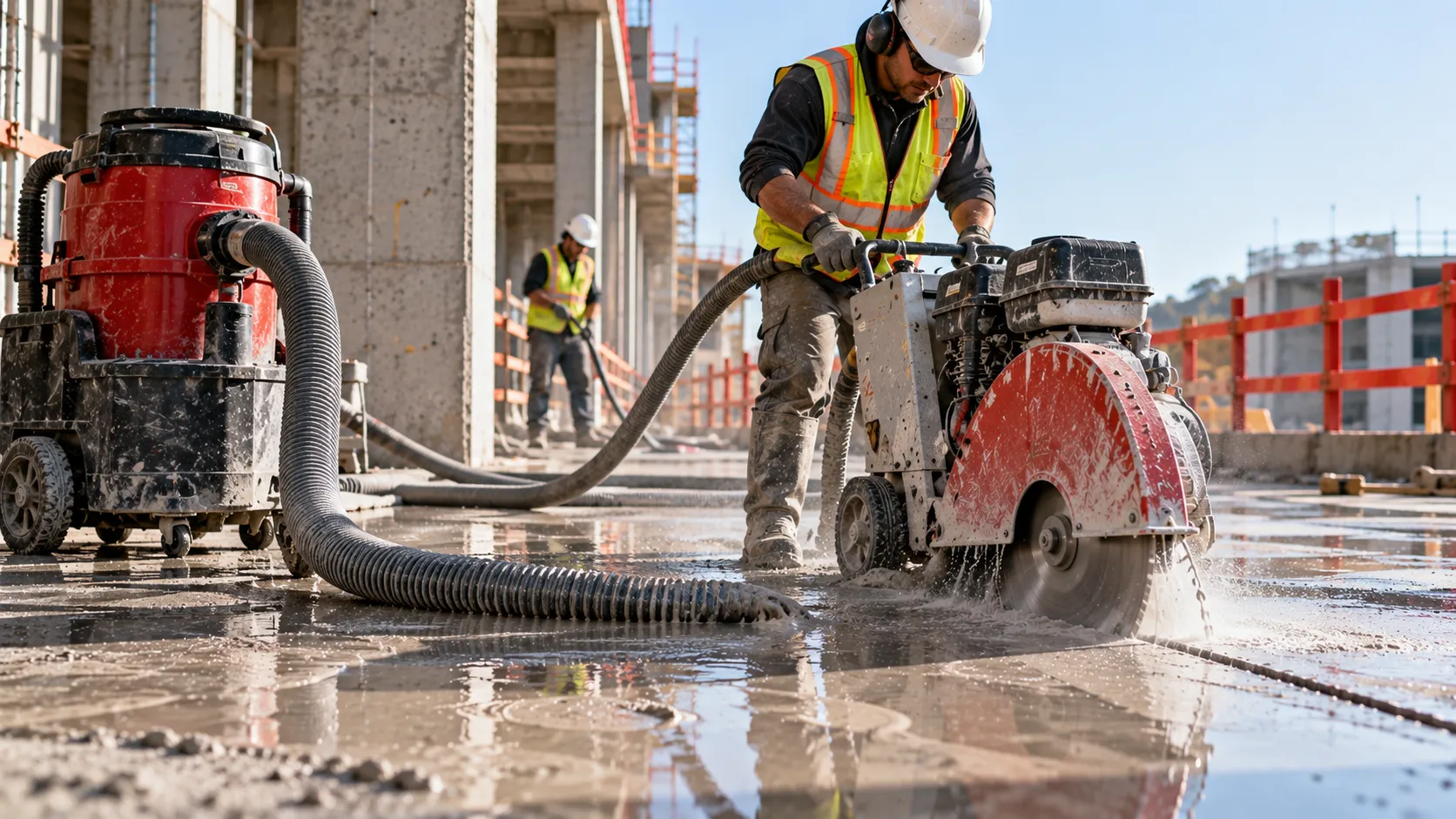
4. Commercial Auto Insurance
Concrete cutting businesses don’t leave their equipment at the office.
Crews travel.
Equipment travels.
Materials travel.
You may operate:
- Work trucks
- Vans
- Service vehicles
- Trucks pulling equipment trailers
- Other company vehicles
Personal auto insurance generally isn’t designed to replace appropriate commercial coverage for business vehicle exposures.
A commercial auto policy may therefore be an important part of a concrete sawing and drilling contractor’s insurance program.
Don’t Forget What’s Being Transported
The truck is one exposure.
The equipment inside or behind it is another.
Suppose a trailer contains specialized cutting or drilling equipment.
What happens if:
The vehicle is involved in an accident?
Equipment is damaged?
Tools are stolen?
A trailer is damaged?
The answer may involve different coverages.
That’s why commercial auto and equipment coverage should be evaluated together rather than assuming one automatically covers everything.
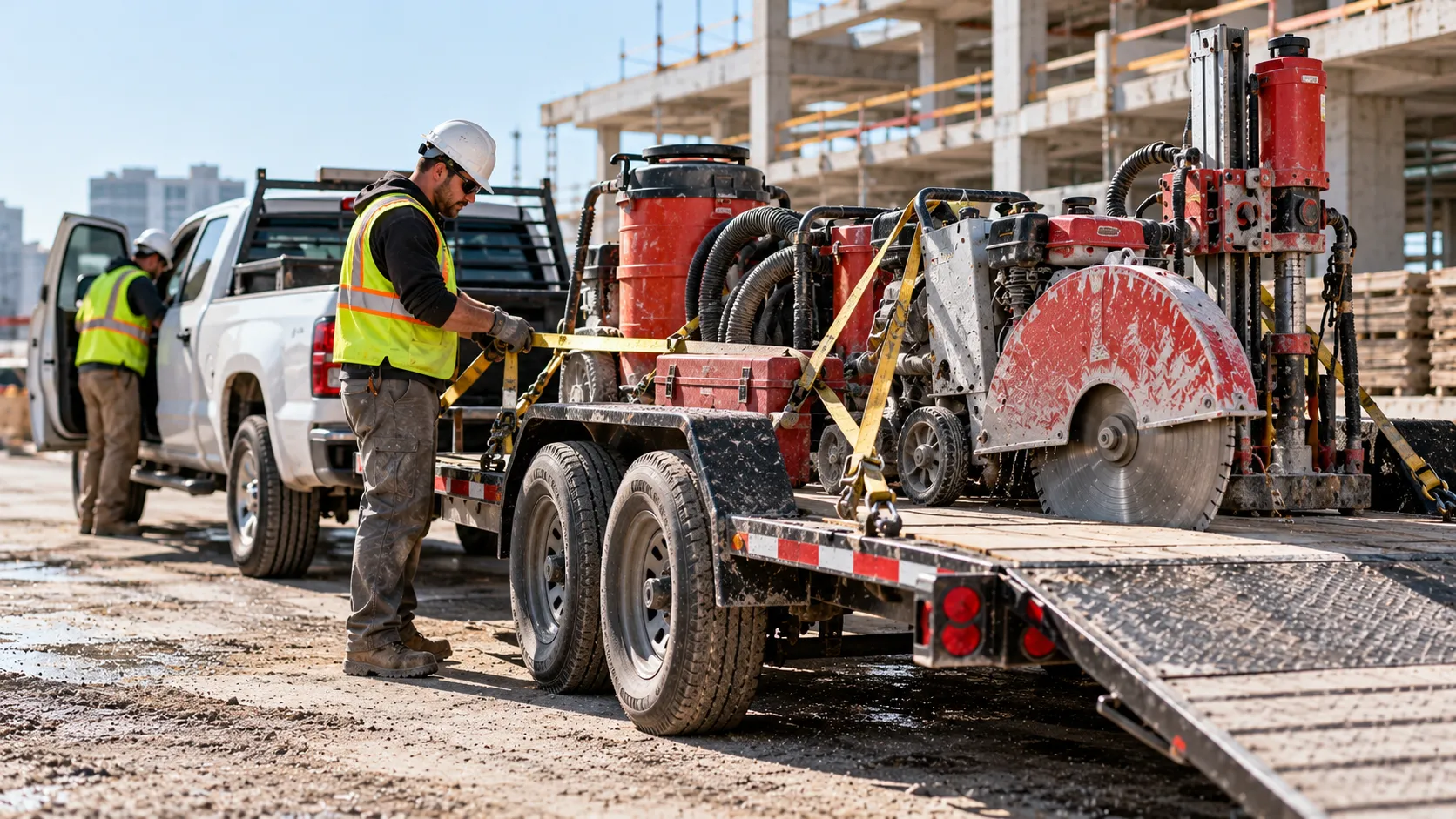
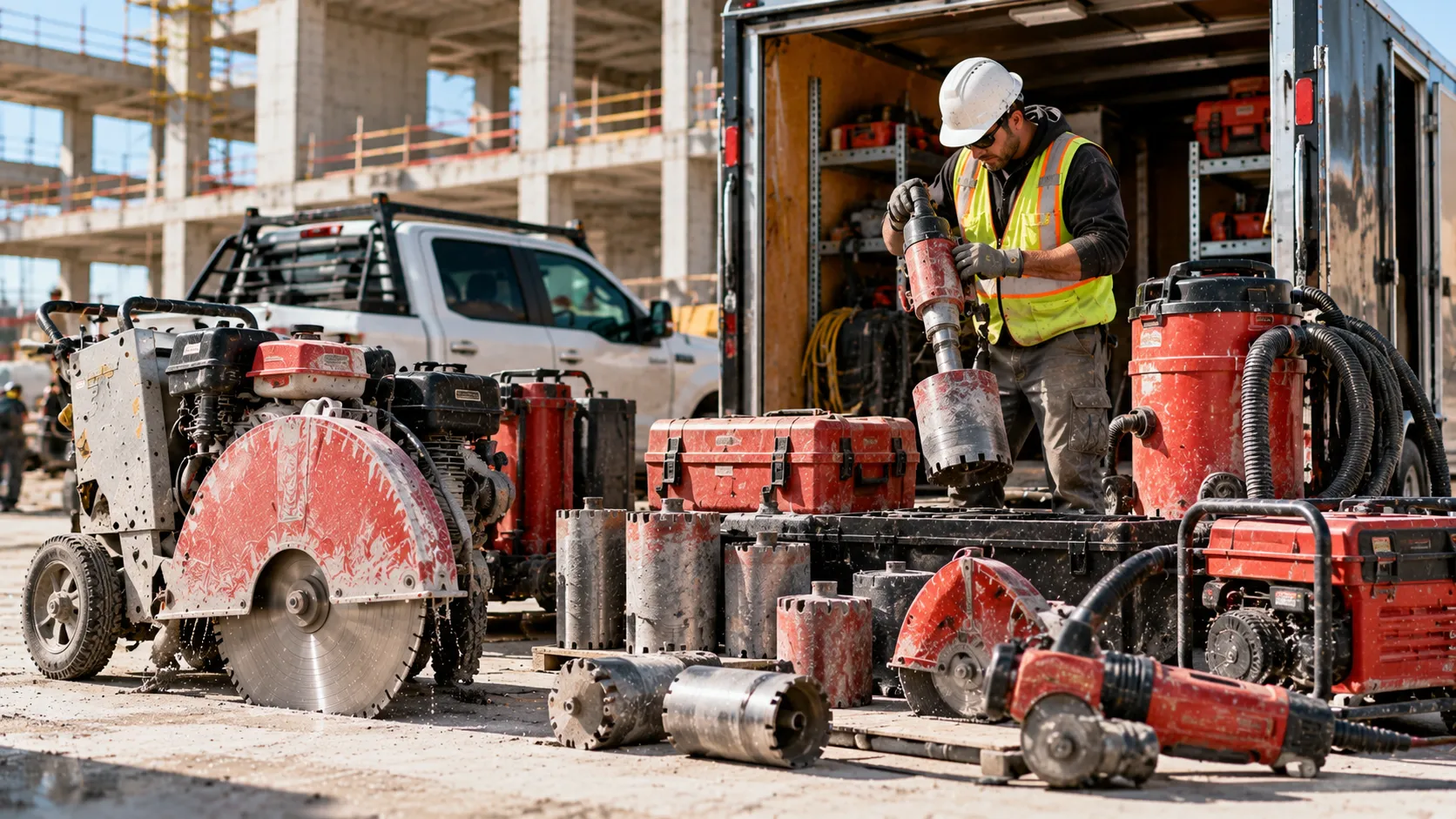
5. Property and Equipment Coverage
Concrete sawing and drilling requires specialized equipment.
Depending on the contractor, that could include:
- Slab saws
- Wall saws
- Wire saws
- Core drills
- Hand saws
- Grinding equipment
- Generators
- Vacuums
- Ground-penetrating radar equipment
- Trailers
- Other specialized tools
Replacing this equipment can be expensive.
And unlike equipment permanently located inside a building, contractor equipment frequently moves between jobsites.
Does General Liability Cover Your Concrete Saw?
Generally speaking, liability insurance and property/equipment insurance serve different purposes.
General liability primarily addresses certain claims made against your business.
Equipment coverage addresses covered loss or damage involving your own insured property, depending on the policy.
This distinction is important.
A contractor can have substantial general liability limits and still have inadequate protection for expensive tools and equipment.
Inland Marine and Contractor Equipment Coverage
Contractors may use inland marine or contractor equipment coverage to insure eligible tools and equipment that move between locations.
The details matter.
Contractors should understand:
- Which equipment is scheduled
- Coverage limits
- Deductibles
- Valuation
- Theft provisions
- Transit coverage
- Rental equipment
- Equipment temporarily located at jobsites
Don’t wait until after a loss to discover how your equipment was insured.
6. Excess Liability Insurance
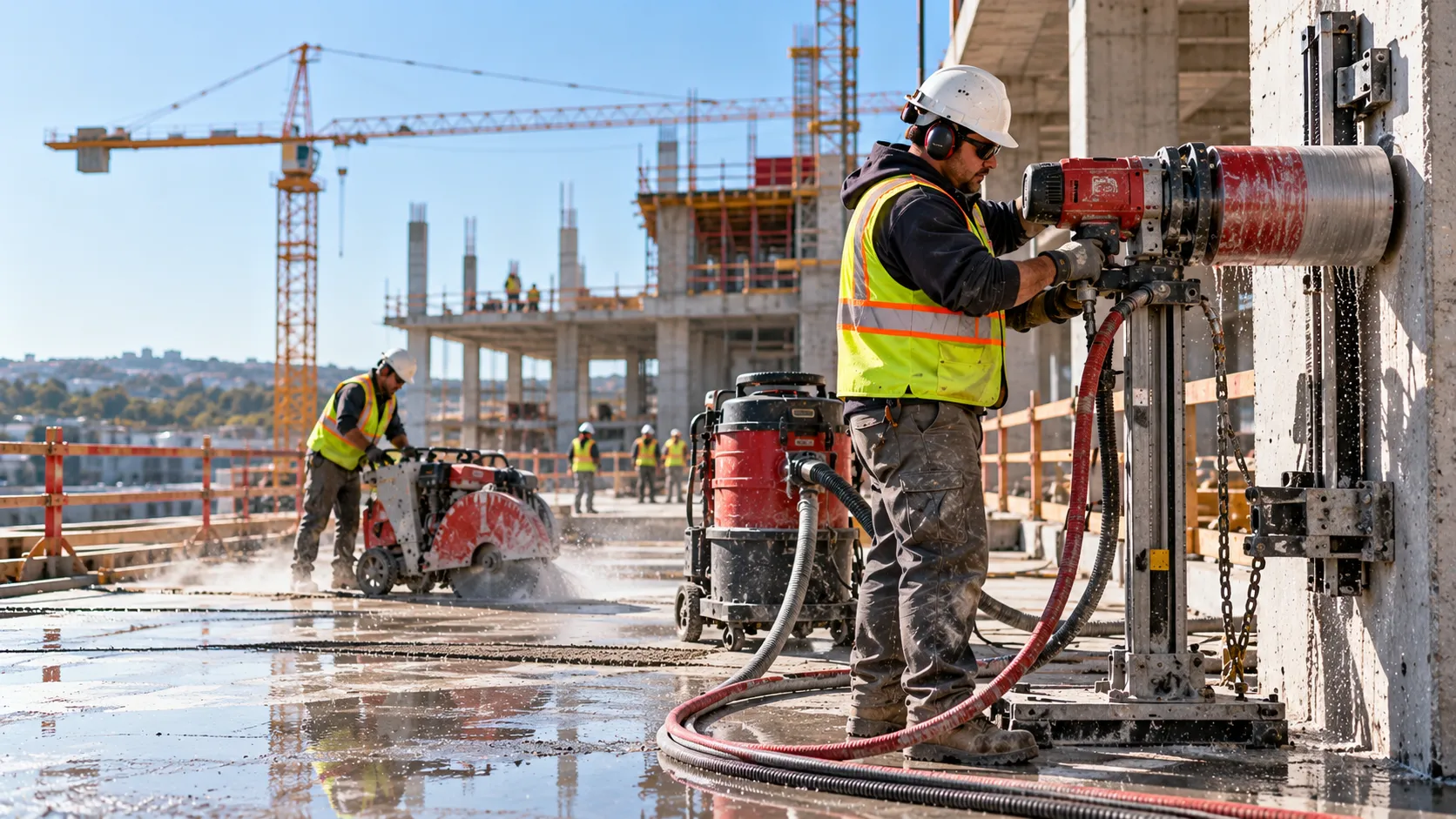
Some contractors need liability limits beyond the underlying policies.
That’s where excess liability may come into the conversation.
A general contractor, property owner, municipality, or other customer may require higher limits as a condition of the contract.
The size and complexity of your projects can also affect the amount of liability protection your company wants to consider.
Bigger Jobs Can Mean Bigger Exposure
Consider the difference between cutting a small slab at a relatively simple jobsite and performing specialty concrete work on a major commercial or industrial project.
The potential consequences of an accident can be dramatically different.
Insurance limits should be evaluated in the context of:
- Project size
- Contract requirements
- Type of work
- Jobsite
- Potential severity of a loss
- Underlying coverage
Excess liability can provide additional limits above certain underlying policies, subject to its own terms and conditions.
7. Surety Bonds
Insurance and surety bonds aren’t the same thing.
But concrete sawing and drilling contractors may encounter bonding requirements, particularly on certain commercial or public projects.
Depending on the project, a contractor might encounter requirements for:
- Bid bonds
- Performance bonds
- Payment bonds
- Other contract bonds
A surety bond generally involves a guarantee associated with an obligation rather than traditional insurance protecting the contractor from ordinary business losses.
If you’re bidding larger projects, bonding capacity can become an important business consideration.
What Insurance Does a Core Drilling Contractor Need?
Core drilling contractors generally face many of the same insurance considerations as other specialty concrete contractors.
Depending on operations, those may include:
- General liability
- Workers’ compensation
- Commercial auto
- Equipment coverage
- Contractors pollution liability
- Excess liability
- Surety bonds
But core drilling also demonstrates why the description of operations matters so much.
Where are you drilling?
What are you drilling through?
How large are the cores?
Are you working overhead?
What types of facilities do you enter?
Are you locating utilities before drilling?
Those details can materially affect how an underwriter views the risk.
What Insurance Does a Concrete Cutting Contractor Need?
“Concrete cutting” can describe several different operations.
Apollo General’s concrete contractor underwriting materials identify operations including:
- Slab sawing
- Core drilling
- Wall sawing
- Hand sawing
- Wire sawing
- Sawing and sealing
- Grooving and grinding
- Ground-penetrating radar imaging
- Selective demolition
That’s important because your insurance company needs to understand what you actually do.
Simply writing “concrete contractor” on an application doesn’t necessarily tell the complete story.
Concrete Sawing Insurance Isn’t the Same as General Concrete Contractor Insurance
A contractor pouring driveways and a contractor wire-sawing reinforced concrete aren’t performing the same work.
Even though both businesses work with concrete, their operations can create different exposures.
Specialized underwriting allows the insurer to evaluate the actual trade rather than treating every company that works with concrete as essentially identical.
That’s one reason working with an insurance provider familiar with concrete sawing, cutting, and core drilling can be valuable.

What Do Insurance Underwriters Want to Know About a Concrete Sawing Contractor?
Insurance applications can feel like paperwork.
But there’s a reason underwriters ask so many questions.
They’re trying to understand the business they’re being asked to insure.
For concrete sawing and drilling contractors, relevant information can include:
Years in Business
Experience matters.
An established company with experienced leadership may be evaluated differently from a contractor entering the trade for the first time.
Annual Sales
Revenue helps the underwriter understand the size of the operation.
Payroll
Payroll can help indicate the size of the workforce and amount of work being performed.
Types of Concrete Work
How much of the business involves:
Slab sawing?
Core drilling?
Wall sawing?
Wire sawing?
Hand sawing?
Grinding?
Selective demolition?
Other operations?
Geographic Area
Where does the contractor perform work?
Types of Projects
Residential?
Commercial?
Industrial?
Public works?
Other specialty environments?
Subcontracting
How much work is subcontracted?
What work is subcontracted?
What insurance requirements are imposed on subcontractors?
Loss History
Previous claims can be an important underwriting consideration.
The frequency, severity, cause, and corrective action associated with previous losses may all matter.
Your Operations Can Affect Eligibility
Not every insurance program is designed for every contractor.
Certain operations may fall outside a carrier’s underwriting appetite.
For example, Apollo General’s current concrete sawing and drilling program identifies several types of operations or circumstances that are ineligible under that particular program.
That doesn’t necessarily mean a contractor is “uninsurable.”
It means that particular program may not be designed for that risk.
This distinction matters.
A specialized insurance professional can help determine whether your operations fit a particular program and what alternatives may need to be explored.
Subcontracting Can Matter More Than You Think
Many specialty contractors subcontract at least some work.
But the percentage and type of subcontracted work can affect underwriting.
Why?
Because subcontracting introduces another company into the chain of responsibility.
Underwriters may want to know:
- How much work you subcontract
- What type of work is subcontracted
- How subcontractors are selected
- Whether written contracts are used
- What insurance subcontractors are required to maintain
- Whether certificates are collected
- Whether appropriate risk-transfer provisions are in place
Apollo’s current concrete sawing and drilling program, for example, has specific eligibility requirements regarding subcontracting.
That’s another reason to discuss your actual business model rather than shopping solely by premium.
Why Does Loss History Matter?
Past claims don’t automatically determine future performance.
But they give underwriters information.
Suppose a company had a substantial loss.
An underwriter may want to know:
What happened?
More importantly:
What changed afterward?
Maybe the company introduced new procedures.
Changed training.
Changed equipment.
Added jobsite verification.
Improved subcontractor controls.
A good explanation can provide considerably more context than simply listing a dollar amount.
What Should You Prepare Before Requesting a Concrete Sawing Insurance Quote?
Being prepared can make the submission process easier.
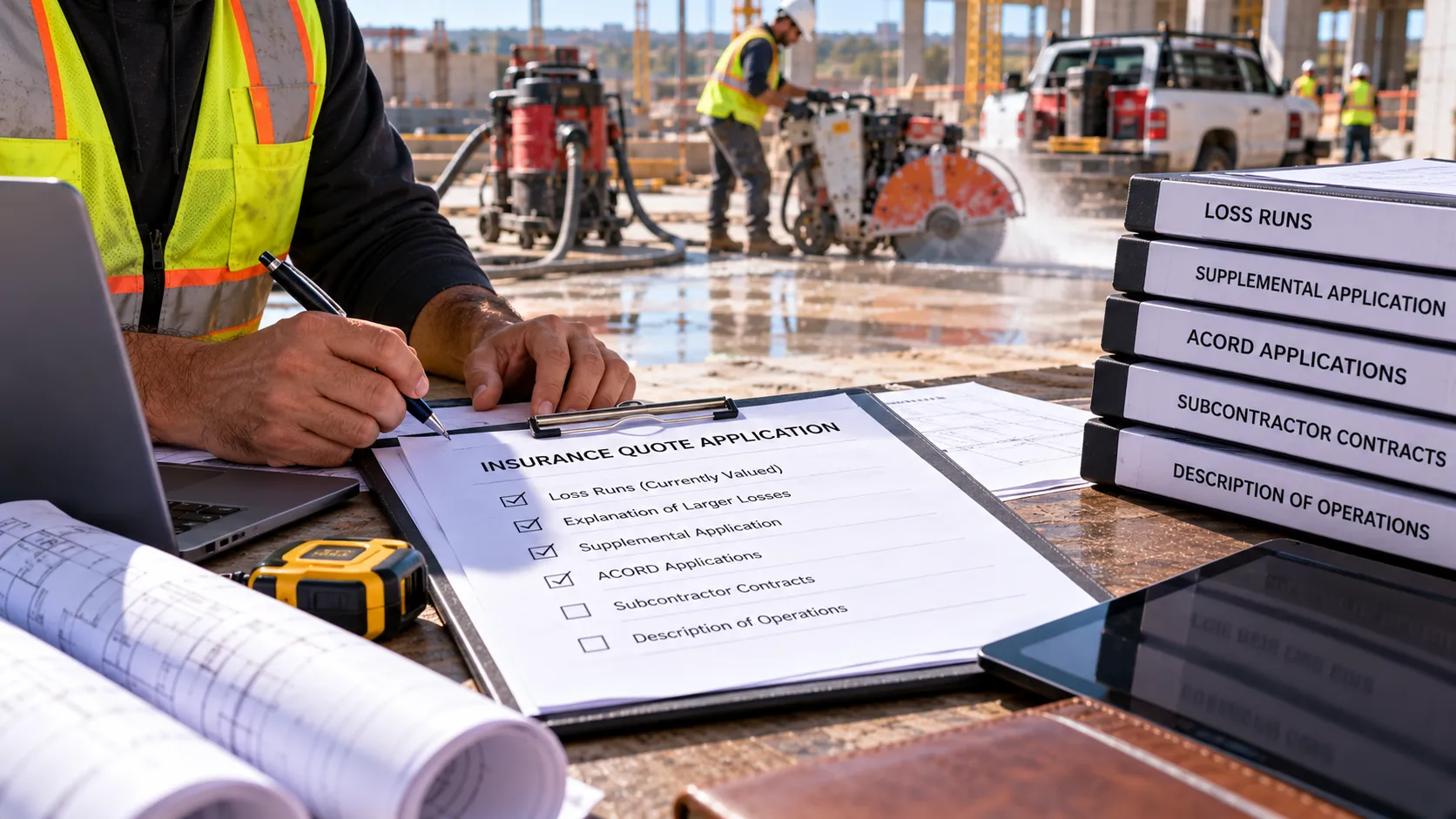
Apollo General currently asks applicants in its concrete sawing and drilling program for information that includes:
- Currently valued loss runs
- Explanations of larger losses
- A completed supplemental application
- ACORD applications
- Subcontractor contracts
- A detailed description of operations
Additional underwriting information may be requested depending on the business.
The lesson is simple:
The better the underwriter understands your company, the better positioned they are to evaluate the actual risk.
Describe Your Operations Accurately
This deserves its own section.
Don’t try to make your business sound less complicated than it is.
If you perform:
Core drilling.
Wall sawing.
Wire sawing.
Selective demolition.
Ground-penetrating radar.
Grinding.
Other specialty operations.
Say so.
Insurance is designed around disclosed operations.
An insurance application isn’t the place for vague marketing language.
It’s the place for accuracy.
How Much Does Concrete Sawing and Drilling Contractor Insurance Cost?
There isn’t one responsible price that applies to every concrete cutting contractor.
Premium can depend on factors such as:
- Annual revenue
- Payroll
- Type of work
- Years in business
- Geographic territory
- Loss history
- Subcontracting
- Project size
- Coverage limits
- Vehicles
- Equipment
- Pollution exposure
- Safety practices
- Contract requirements
Two companies performing “concrete cutting” could receive very different insurance pricing because their actual operations are different.
Don’t Shop on Premium Alone
Price matters.
Every contractor needs to control expenses.
But the cheapest policy isn’t necessarily the best value.
Consider what happens if a low-cost policy doesn’t fit your operations.
Or doesn’t satisfy a major customer’s contract.
Or excludes an exposure you assumed was covered.
The better question isn’t:
“What’s the cheapest concrete cutting insurance?”
It’s:
“What coverage does my business actually need, and what’s the most competitive way to insure it correctly?”
Why Work With a Specialist in Concrete Sawing and Drilling Insurance?
Specialty trades benefit from insurance professionals who understand the terminology.
You shouldn’t have to spend half the conversation explaining the difference between:
Slab sawing.
Core drilling.
Wall sawing.
Wire sawing.
And ordinary concrete construction.
An insurance professional familiar with the trade can ask better questions about:
- Operations
- Contracts
- Equipment
- Subcontracting
- Job types
- Loss history
- Pollution exposures
- Required limits
Better questions lead to a clearer understanding of the risk.
Apollo General Insurance and Concrete Sawing & Drilling Contractors
Apollo General Insurance specializes in commercial insurance programs for niche contractor industries, including concrete sawing and drilling.
Apollo’s current Concrete Sawing and Drilling Contractors Insurance program serves qualifying specialty trade contractors engaged in operations including concrete sawing, cutting, breaking, polishing, shaving, trenching, curing, and core drilling.
Depending on the contractor’s needs and eligibility, additional policies may also be available for:
- Excess liability
- Contractors pollution liability
- Commercial automobile liability
- Property and equipment
- Surety bonds
- Workers’ compensation
Coverage availability, eligibility, terms, conditions, exclusions, limits, and pricing depend on the individual risk and applicable policy.
Are You Reviewing Your Concrete Contractor Insurance?
Your business changes.
Maybe you’ve purchased new equipment.
Started doing larger projects.
Added employees.
Expanded into another state.
Started subcontracting more work.
Added wall sawing.
Started performing selective demolition.
Taken on different types of customers.
Your insurance program should be reviewed as your operations evolve.
A policy that fit the business three years ago may not accurately reflect what the company does today.
Conclusion
Concrete sawing and drilling contractors perform highly specialized work.
Their insurance should reflect that.
General liability may form the foundation of a contractor’s insurance program, but it may not be the only coverage worth considering.
Depending on the company, a complete insurance discussion may also include:
Workers’ compensation.
Contractors pollution liability.
Commercial auto.
Equipment coverage.
Excess liability.
Surety bonds.
Most importantly, insurance should be based on what the contractor actually does.
A slab-sawing company isn’t necessarily the same risk as a core drilling company.
A core drilling contractor isn’t necessarily the same as a company performing wall sawing, wire sawing, grinding, selective demolition, or other specialty operations.
That’s why the right insurance conversation begins with the work.
Understand the operation. Identify the exposures. Then build the insurance program around them.
Apollo General Insurance has decades of experience working with specialty contractor industries, including concrete sawing and drilling contractors.
If you’re reviewing your current coverage or preparing for an upcoming renewal, talk with Apollo General about your operations and the insurance options available for your business.

Frequently Asked Questions About Concrete Sawing and Drilling Contractor Insurance
1. What insurance does a concrete sawing and drilling contractor need?
Depending on the business, coverage may include general liability, workers’ compensation, contractors pollution liability, commercial auto, property and equipment coverage, excess liability, and surety bonds.
2. Do concrete cutting contractors need general liability insurance?
General liability is a foundational coverage for many concrete cutting businesses because their operations can create third-party bodily injury and property-damage exposures.
3. What insurance does a core drilling contractor need?
Core drilling contractors may need general liability, workers’ compensation, commercial auto, equipment coverage, pollution liability, excess liability, and bonds depending on their operations and contracts.
4. Does general liability cover concrete cutting equipment?
General liability generally addresses certain liability claims against the business rather than loss or damage to the contractor’s own equipment. Separate property or equipment coverage may be appropriate.
5. What insurance covers concrete saws and core drilling equipment?
Contractors may use property, inland marine, or contractor equipment coverage for eligible tools and mobile equipment, depending on the policy.
6. Do concrete contractors need pollution liability insurance?
Some concrete contractors should consider contractors pollution liability because their operations may involve dust, slurry, fuels, oils, waste, or other potential environmental exposures. General liability policies may contain pollution exclusions or limitations.
7. Does concrete slurry create an insurance exposure?
It can. Contractors should understand how their operations handle slurry and waste and discuss potential pollution exposures with an insurance professional.
8. Do concrete sawing contractors need workers’ compensation?
Workers’ compensation requirements vary by jurisdiction, but businesses with employees may be required to maintain coverage. Concrete sawing also presents significant employee injury and occupational exposures.
9. Do concrete cutting contractors need commercial auto insurance?
Businesses using vehicles for company operations should evaluate appropriate commercial auto coverage rather than assuming personal auto policies will cover business use.
10. What is completed operations coverage for a concrete contractor?
Completed operations generally relates to certain liability claims arising from work after the contractor has completed the job, subject to the policy’s terms and exclusions.
11. What is excess liability insurance for concrete contractors?
Excess liability can provide additional limits over certain underlying liability policies. Contractors may need higher limits because of project exposures or contractual requirements.
12. Do concrete cutting contractors need surety bonds?
Some projects require contractors to provide bid, performance, payment, or other surety bonds. Requirements depend on the project and contract.
13. Does subcontracting affect concrete contractor insurance?
It can. Underwriters may consider the percentage of subcontracted work, the type of work subcontracted, contractual risk transfer, and the insurance maintained by subcontractors.
14. Does loss history affect concrete cutting insurance rates?
Loss history can be an important underwriting factor. Insurers may evaluate the frequency, severity, causes, and circumstances of previous claims.
15. Does experience affect eligibility for concrete sawing insurance?
It can. Some specialty insurance programs have minimum operating-experience requirements or may request information about the experience of owners and key personnel.
16. What information do I need for a concrete cutting contractor insurance quote?
You may be asked for a detailed description of operations, payroll, revenue, loss runs, applications, subcontractor information, geographic territory, job history, and other underwriting information.
17. How much does concrete sawing and drilling insurance cost?
Pricing varies based on the contractor’s operations, revenue, payroll, experience, claims, location, subcontracting, equipment, vehicles, limits, and other underwriting factors.
18. Is concrete sawing insurance different from regular concrete contractor insurance?
It can be. Specialty sawing, cutting, drilling, grinding, and related operations create exposures that may differ from contractors primarily pouring or finishing concrete.
19. Does Apollo General insure concrete sawing and drilling contractors?
Apollo General offers a specialty Concrete Sawing and Drilling Contractors Insurance program for qualifying contractors. Eligibility and available coverage depend on the contractor’s operations and underwriting requirements.
20. How do I get a concrete sawing and drilling contractor insurance quote?
Be prepared to provide detailed information about your operations, experience, payroll, revenue, loss history, subcontracting, equipment, and project types. An insurance professional familiar with concrete sawing and drilling can then evaluate available coverage options.