Introduction
Demolition contractors encounter insurance terminology that most business owners will never need to understand.
One of those terms is XC&U.
You may see it on an insurance application.
It may appear in a construction contract.
A general contractor may ask whether your policy includes it.
Or your insurance broker may mention an XC&U exclusion while reviewing your general liability coverage.
But what does XC&U actually mean?
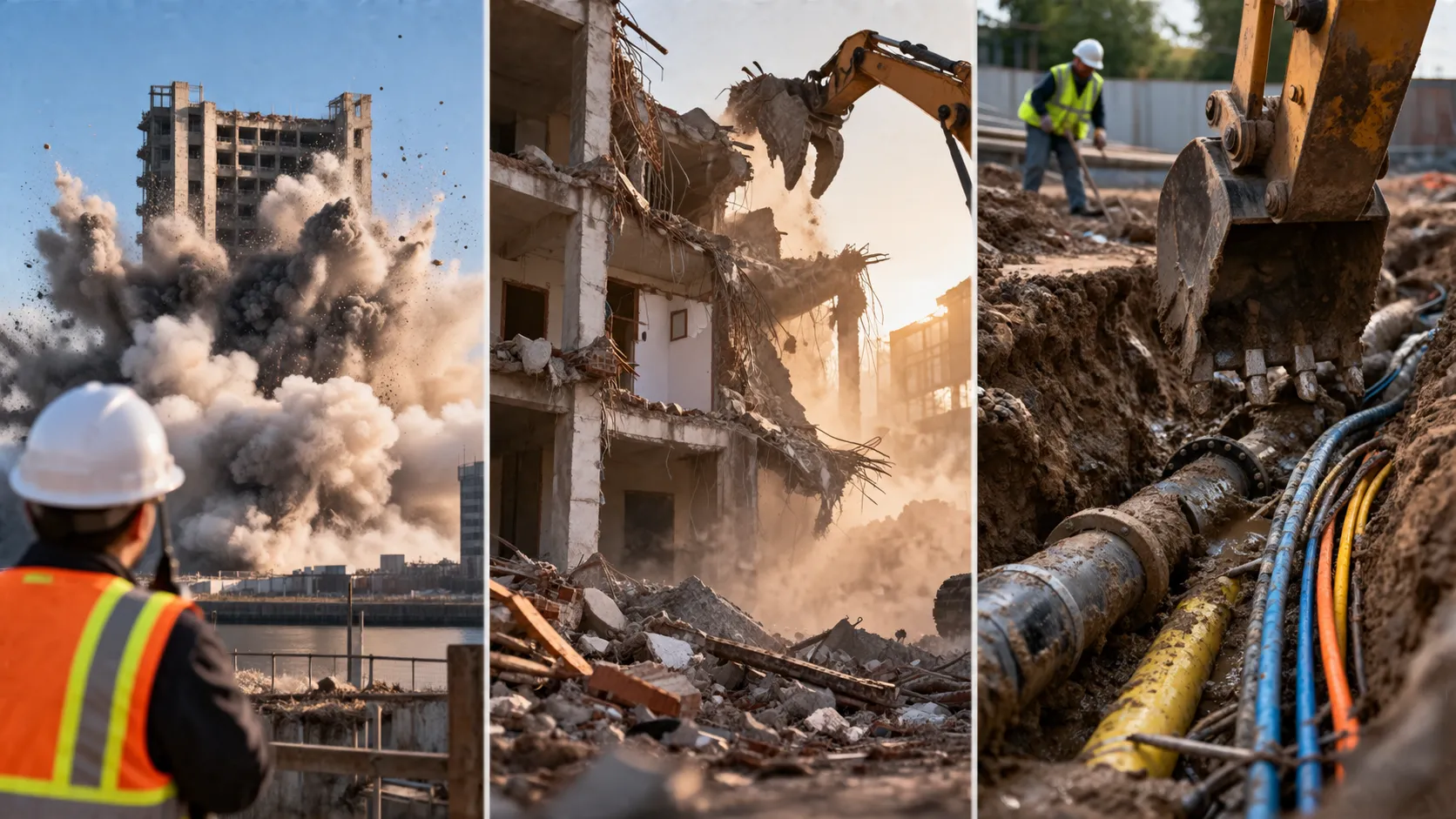
XC&U stands for Explosion, Collapse, and Underground.
Those three categories represent liability exposures that can be particularly important for contractors performing demolition, excavation, structural work, and other operations capable of affecting surrounding property.
For a demolition contractor, simply having a Commercial General Liability policy isn’t enough information.
You need to understand whether that policy contains exclusions or limitations that could affect the work you’re actually performing.
Here’s what demolition contractors should know.
What You’ll Learn
- What XC&U means
- What the “X,” “C,” and “U” represent
- Why these exposures matter in demolition
- How an XC&U exclusion can affect a contractor
- Why contracts may require XC&U coverage
- What to review before bidding a demolition project
- Why your actual operations matter when obtaining insurance

What Does XC&U Stand For?
XC&U refers to three categories of contracting exposures:
X — Explosion
C — Collapse
U — Underground
Historically, insurers have treated these exposures carefully because a single incident can potentially result in significant property damage or bodily injury.
That makes them particularly relevant to construction and demolition.
Let’s look at each one separately.
X: Explosion
The “X” in XC&U refers to explosion hazards.
When people hear “explosion” in demolition, they often immediately think about imploding a large building with explosives.
That is certainly an obvious example.
But insurance language can be more complicated than the everyday meaning of a word.
The exact definition of an explosion hazard and how it applies depends on the insurance policy.
For contractors whose operations involve blasting or other explosive hazards, this can become a significant underwriting issue.
Does Every Demolition Insurance Policy Cover Blasting?
No.
Blasting can fall outside the underwriting appetite of some demolition insurance programs.
A carrier willing to insure mechanical demolition may not necessarily be willing to insure explosive demolition.
That’s an important distinction.
If your company performs blasting—or plans to subcontract it—disclose that operation clearly during the insurance application process.
Never assume that because your policy covers “demolition,” every method of demolition is automatically included.
C: Collapse
The “C” stands for collapse.
This is where XC&U becomes especially relevant to demolition contractors.
Demolition involves intentionally dismantling structures.
Depending on the project, that could involve:
- Walls
- Floors
- Roofs
- Structural components
- Entire buildings
The intended demolition itself is one thing.
The liability concern is what happens when structural movement causes unintended damage or injury.
Imagine This Scenario
Your company is demolishing one building located close to another structure.
During the work, a portion of the structure falls differently than expected and damages the neighboring property.
The loss could be substantial.
Now imagine discovering after the incident that your liability policy contains an exclusion relevant to the collapse exposure created by your operations.
That’s why demolition contractors need to understand their policies before the work begins, not after a claim occurs.
Collapse Exposure Isn’t Limited to Complete Building Demolition
Interior demolition can create structural concerns too.
So can renovation work.
Removing walls, cutting structural components, excavating near foundations, or performing other operations that affect structural stability can potentially create collapse exposures.
The actual work matters.
An underwriter needs an accurate description of your operations to evaluate the risk properly.
U: Underground
The “U” in XC&U refers to underground hazards.
This can involve damage to underground property arising from certain contracting operations, depending on applicable policy definitions and language.
Think about what’s underneath a jobsite.
Potential underground infrastructure can include:
- Water lines
- Sewer lines
- Gas lines
- Electrical service
- Telecommunications
- Fiber-optic cables
- Drainage systems
- Other buried utilities
Damaging one can become expensive quickly.
The Utility Line You Didn’t Know Was There
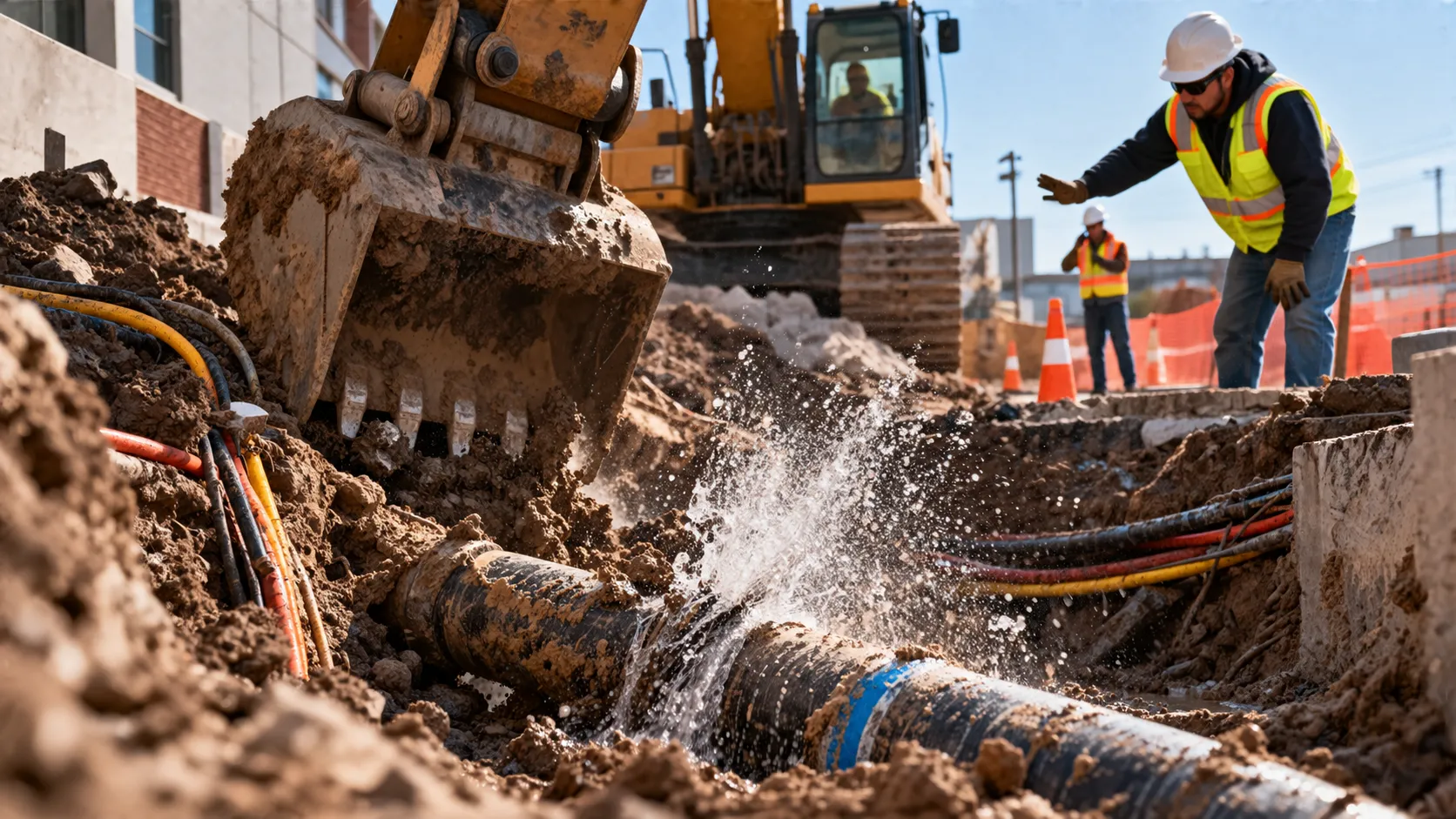
Imagine your demolition project includes removing foundations or performing excavation.
Your operator begins working in an area believed to be clear.
Then the equipment strikes an underground utility.
Now the project may involve:
- Utility repair
- Project delays
- Property damage
- Business interruption
- Emergency response
- Potential third-party claims
The circumstances surrounding the incident and the policy language determine how insurance may respond.
The important point is that demolition work doesn’t stop at ground level.
Underground exposure needs to be considered too.
Why Is XC&U Particularly Important for Demolition Contractors?
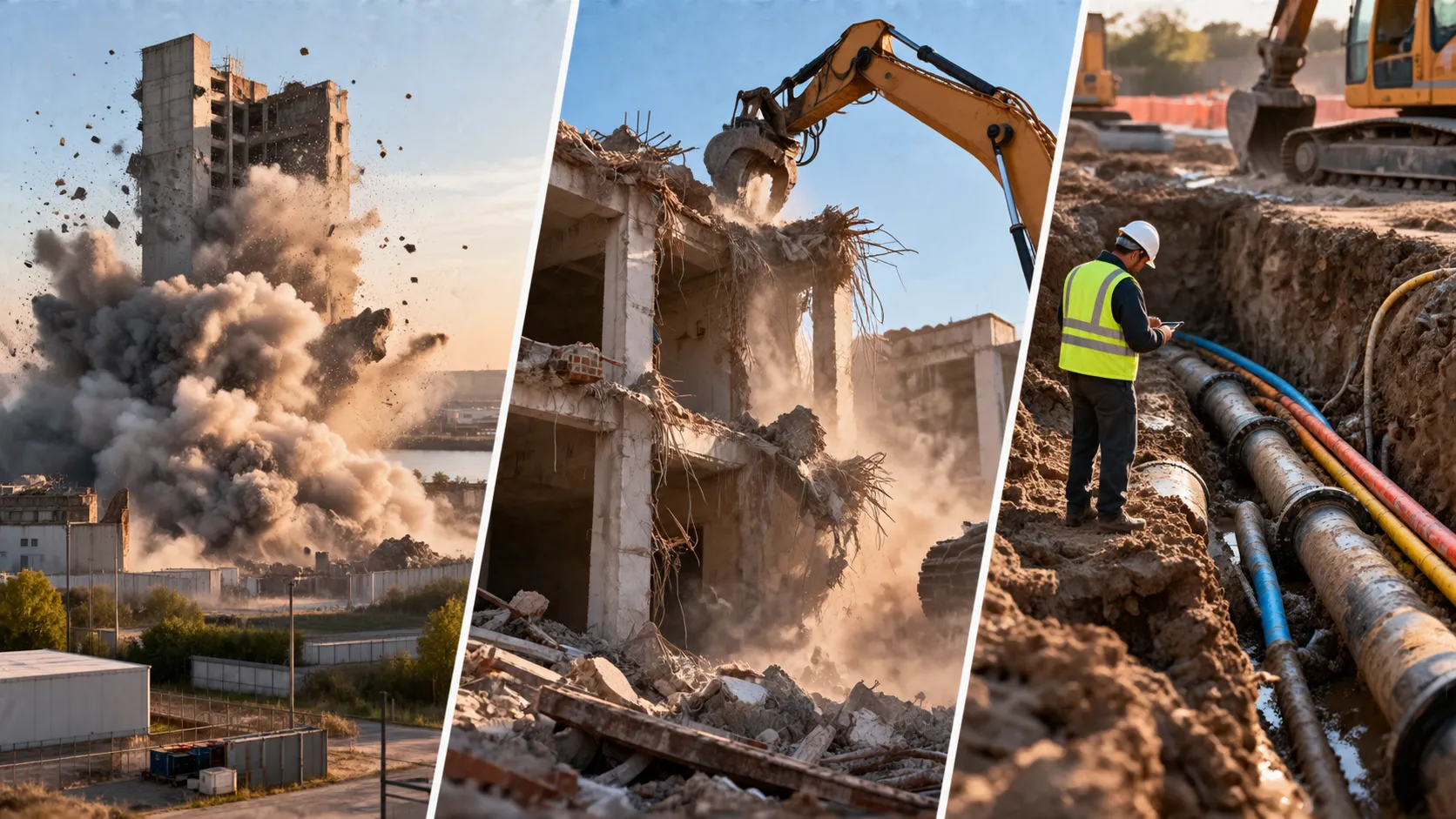
Consider the three exposures together:
Explosion
Demolition operations may sometimes involve explosive hazards.
Collapse
Demolition inherently involves removing or destabilizing structural components.
Underground
Demolition may include foundations, excavation, utility exposure, or other below-grade work.
Now compare that with an office-based business.
The difference in risk is obvious.
That’s why demolition contractor insurance often requires specialized underwriting.
Is XC&U a Separate Insurance Policy?
Not necessarily.
When contractors discuss “XC&U coverage,” they’re often talking about whether their Commercial General Liability insurance excludes or addresses these particular hazards.
The terminology can be confusing because people sometimes refer casually to “having XC&U.”
The more precise question is:
“How does my liability policy address explosion, collapse, and underground hazards for the operations I perform?”
That answer depends on the actual policy.

What Is an XC&U Exclusion?
An exclusion identifies circumstances or exposures the insurance policy does not cover.
Depending on the policy, exclusions relating to explosion, collapse, or underground property damage may restrict coverage for certain claims arising from those operations.
For a demolition contractor, that can create an obvious concern.
You could potentially have a general liability policy while having limitations involving some of the activities central to your business.
That’s why the existence of a policy alone doesn’t tell the entire story.
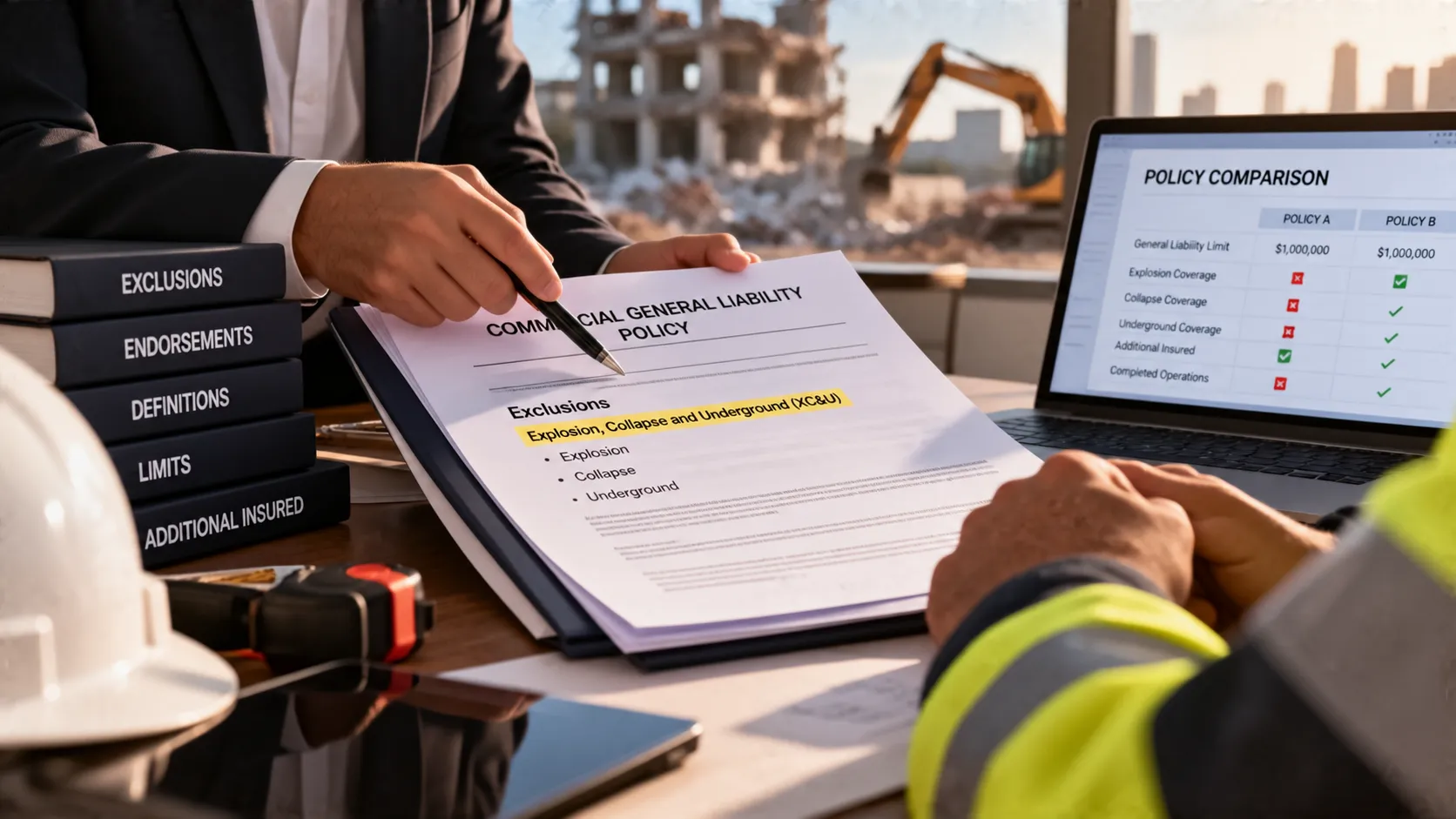
“I Have General Liability” Isn’t Enough
This is one of the most important insurance lessons for contractors.
Two businesses can each carry:
$1 million in Commercial General Liability insurance
and have very different protection.
Why?
Because policies can differ in:
- Exclusions
- Endorsements
- Definitions
- Covered operations
- Limits
- Aggregates
- Additional insured provisions
- Completed operations provisions
The number printed on the certificate of insurance doesn’t explain all of that.
For demolition contractors, the details can matter significantly.
What Does a Certificate of Insurance Tell You?
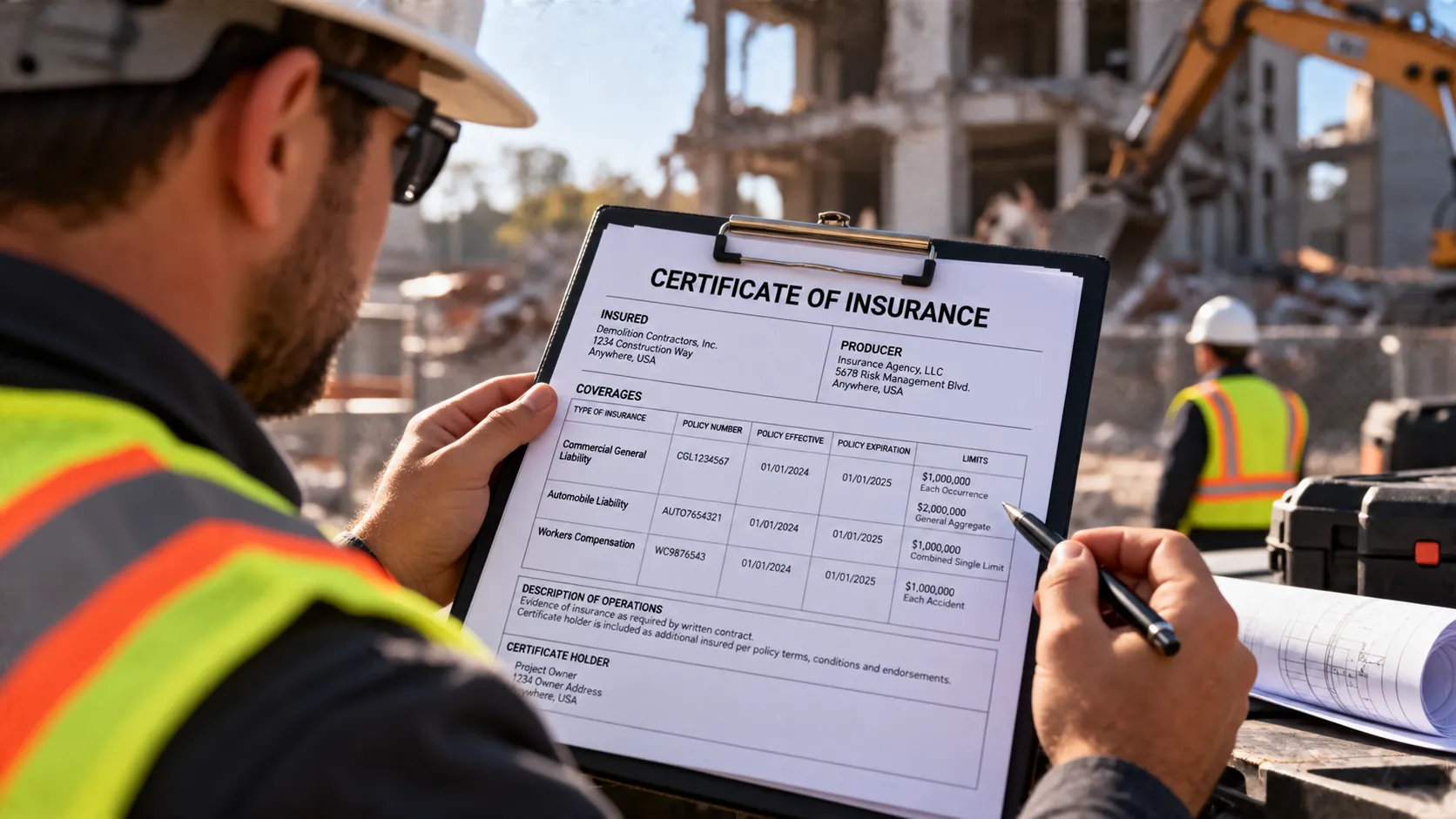
A Certificate of Insurance can provide useful evidence that certain insurance policies and limits exist at the time the certificate is issued.
But a certificate is not a substitute for reading the actual policy and applicable endorsements.
That’s particularly important when a contract contains specific requirements involving XC&U or other specialized coverage provisions.
Don’t assume a certificate showing General Liability automatically proves every contractual insurance requirement has been satisfied.
Why General Contractors and Project Owners May Require XC&U
Owners and general contractors want to transfer or manage risk associated with the companies working on their projects.
If you’re performing demolition, they may be concerned about damage caused by:
- Structural collapse
- Excavation
- Underground utilities
- Adjacent property
- Other demolition operations
Their contract may therefore specify that your insurance cannot contain certain exclusions relating to these exposures.
This is why insurance should be reviewed before bidding or signing the contract.

Read the Insurance Requirements Before You Price the Job
Imagine winning a major demolition contract.
Then you send the insurance requirements to your broker.
There’s a problem.
Your current carrier can’t satisfy one of the required provisions.
Now you have several possibilities:
You need different insurance.
You need an endorsement.
The contract needs to change.
The project doesn’t fit your existing insurance program.
Or obtaining the required coverage materially changes your cost.
None of those are conversations you want to have after you’ve already priced the project.
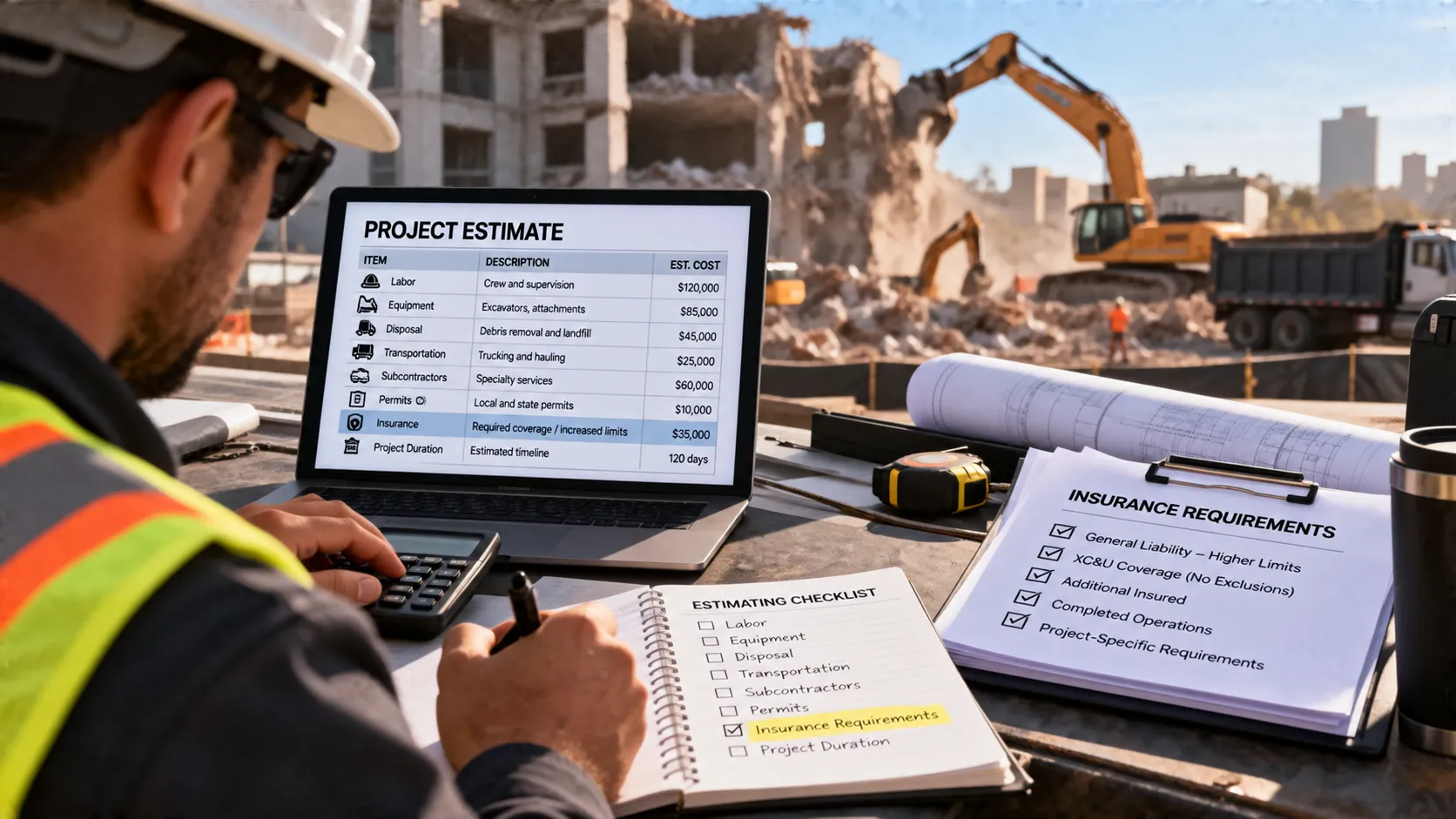
Insurance Requirements Should Be Part of Estimating
Demolition contractors are accustomed to estimating:
- Labor
- Equipment
- Disposal
- Transportation
- Subcontractors
- Permits
- Project duration
Insurance requirements should be reviewed as part of that same process.
If a project requires substantially higher limits or specialized coverage, satisfying those requirements may affect the economics of the job.
Know that before you submit the bid.
 Does XC&U Affect Residential Demolition?
It can.
A single-family residence may seem less complicated than a large commercial building, but the property can still be located:
- Close to neighboring homes
- Near underground utilities
- On a constrained site
- Near retaining walls
- Near other structures
The relevant exposure depends on the project and operations, not simply whether the property is residential or commercial.

What About Interior Demolition?
Interior strip-outs can have different exposures than complete structural demolition.
The contractor may be removing:
- Flooring
- Ceilings
- Fixtures
- Mechanical components
- Interior walls
- Other building materials
Whether collapse or other XC&U-related exposures are relevant depends on the scope of work and applicable policy language.
Again, accurate descriptions matter.
What About Subcontractors?
Subcontracting doesn’t necessarily make an exposure disappear.
If your company hires another contractor to perform excavation, blasting, structural work, or another specialized operation, your insurance and contractual responsibilities still deserve careful review.
Questions to consider include:
- Does the subcontractor carry appropriate insurance?
- What limits are required?
- Are written contracts used?
- Are additional insured provisions required?
- Are certificates collected?
- Does the subcontractor’s policy contain relevant exclusions?
- Does your own policy impose requirements regarding subcontracted work?
Subcontractor risk management should be part of the insurance discussion.
What Should Demolition Contractors Ask Their Insurance Broker?
You don’t need to become an insurance underwriter.
But you should know what questions to ask.
Before beginning a project, consider asking:
Does my General Liability policy contain exclusions related to explosion, collapse, or underground hazards?
Do my operations fit the policy’s underwriting classification?
Does the policy address the demolition work we’re actually performing?
Does this project contract require XC&U?
Can my current insurance satisfy those requirements?
Are there other exclusions in the policy that could affect this project?
Those questions are much more useful than simply asking:
“Am I covered?”

What Information Does an Underwriter Need?
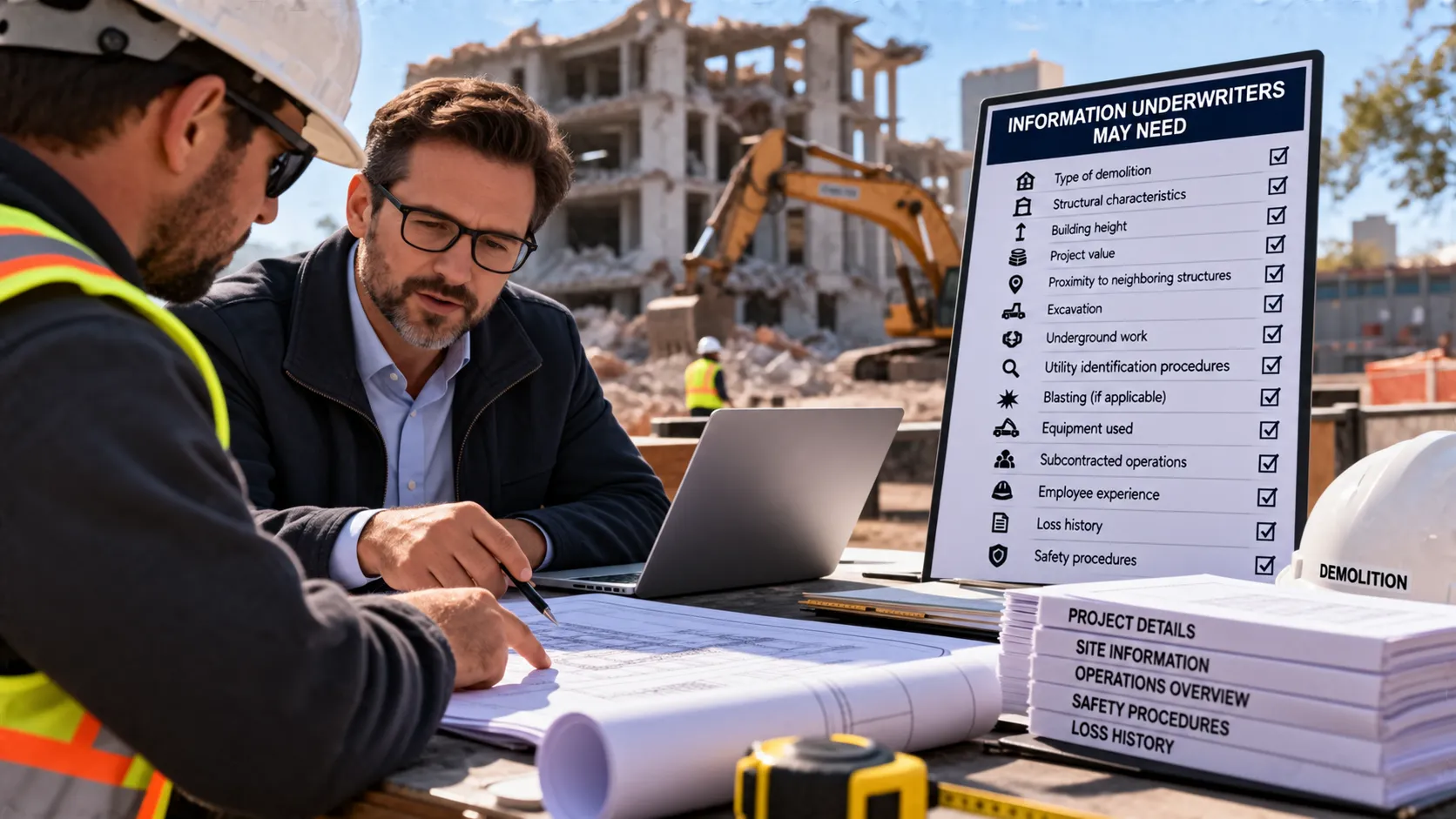
If XC&U exposures are relevant, the underwriter may want to understand the project and your company’s operations in detail.
Information could include:
- Type of demolition
- Structural characteristics
- Building height
- Project value
- Proximity to neighboring structures
- Excavation
- Underground work
- Utility identification procedures
- Blasting
- Equipment used
- Subcontracted operations
- Employee experience
- Loss history
- Safety procedures
The more unusual the project, the more important accurate information becomes.
Never Hide an Operation Because You’re Worried About the Answer
Suppose your company occasionally performs an operation that you know insurance carriers scrutinize.
Leaving it off an application isn’t the solution.
Insurance needs to be based on what the business actually does.
An experienced specialty insurance professional can help determine which markets may be appropriate for those operations.
Accurate disclosure protects both sides of the insurance relationship.
Why Specialized Demolition Insurance Experience Matters
XC&U is a good example of why demolition contractors benefit from insurance professionals who understand demolition.
A generalist may see:
Contractor.
A demolition specialist sees:
What kind of demolition?
Residential?
Commercial?
Interior strip-out?
Structural?
Excavation?
How tall are the buildings?
How large are the projects?
How much is subcontracted?
What happens below grade?
What does the contract require?
Those questions help determine the actual exposure.
Apollo General Insurance Agency’s Demolition Contractor Program
Apollo General Insurance Agency has decades of experience in specialty commercial insurance and offers dedicated programs for eligible demolition contractors.
Apollo works with operations that can include residential tear-downs, commercial demolition, and interior strip-outs, subject to underwriting requirements.
The program can address important demolition insurance considerations, including XC&U exposures where applicable.
For contractors and insurance brokers dealing with demolition risks, working with a market that understands the class can make the underwriting conversation substantially more productive.
Need Demolition Contractor Insurance With XC&U Considerations?
Don’t wait until after winning a project to discover that your existing insurance can’t meet the contract requirements.
Review the project.
Review the insurance specifications.
Review your actual policy.
Then address questions before work begins.
Insurance professionals and brokers looking for specialty demolition contractor coverage can learn more about Apollo General Insurance Agency’s demolition program through Apollo General Insurance Agency.
Conclusion
XC&U sounds complicated.
The concept itself isn’t.
X: Explosion
C: Collapse
U: Underground
For many businesses, these aren’t major everyday concerns.
For demolition contractors, they can be directly connected to the work being performed.
That’s why simply knowing you have General Liability insurance isn’t enough.
Understand your operations.
Understand your contract.
Understand your policy.
And before bidding the next project, ask one more question:
“Does our insurance actually address the risks this job creates?”

Frequently Asked Questions About XC&U Coverage
1. What does XC&U stand for in insurance?
XC&U stands for Explosion, Collapse, and Underground.
2. What is XC&U coverage?
The term generally refers to how a liability policy addresses explosion, collapse, and underground hazards associated with certain contracting operations.
3. Is XC&U a separate insurance policy?
Not necessarily. XC&U commonly relates to provisions, exclusions, or coverage within Commercial General Liability insurance.
4. Why do demolition contractors need to understand XC&U?
Demolition operations can involve structural collapse, underground property, excavation, and potentially explosive hazards, making these exposures particularly relevant.
5. What does the X in XC&U mean?
X refers to explosion hazards.
6. What does the C in XC&U mean?
C refers to collapse hazards.
7. What does the U in XC&U mean?
U refers to underground hazards.
8. Does every General Liability policy include XC&U?
No. Policies vary, and exclusions or limitations may apply.
9. What is an XC&U exclusion?
It generally refers to policy language excluding or restricting coverage for certain explosion, collapse, or underground hazards.
10. Does a certificate of insurance show whether XC&U is covered?
A certificate alone may not provide enough information to determine how the underlying policy addresses XC&U. Review the actual policy and endorsements.
11. Why would a general contractor require XC&U?
The project may involve demolition, excavation, structural work, underground utilities, or other operations creating these exposures.
12. Does XC&U matter for residential demolition?
Potentially. The exposure depends on the operations, site, neighboring property, underground utilities, and applicable insurance policy.
13. Does XC&U matter for interior demolition?
It may, depending on the work being performed and the applicable policy language.
14. Does XC&U automatically cover blasting?
No. Blasting can be a specialized exposure and should be specifically discussed with the insurance professional and carrier.
15. Can underground utility damage be an XC&U issue?
Potentially. Underground hazards can be relevant when contracting operations damage buried property or utilities, subject to policy definitions and terms.
16. Should I review XC&U before bidding a demolition project?
Yes. Reviewing contractual insurance requirements before bidding can help identify potential coverage or cost issues early.
17. Can an XC&U exclusion keep me from winning a project?
Potentially. If the contract requires coverage your policy cannot provide, you may not satisfy the project’s insurance requirements.
18. Do subcontractors need XC&U coverage?
That depends on their operations, contractual requirements, and insurance program. Subcontractor coverage should be evaluated based on the work they perform.
19. How do I know whether my demolition policy has an XC&U exclusion?
Review the policy and endorsements with an insurance professional familiar with demolition risks.
20. Does Apollo General Insurance Agency work with XC&U exposures?
Apollo offers specialty insurance programs for eligible demolition contractors and can evaluate applicable demolition exposures and coverage requirements as part of the underwriting process.