
Construction and demolition debris recycling is a specialized business.
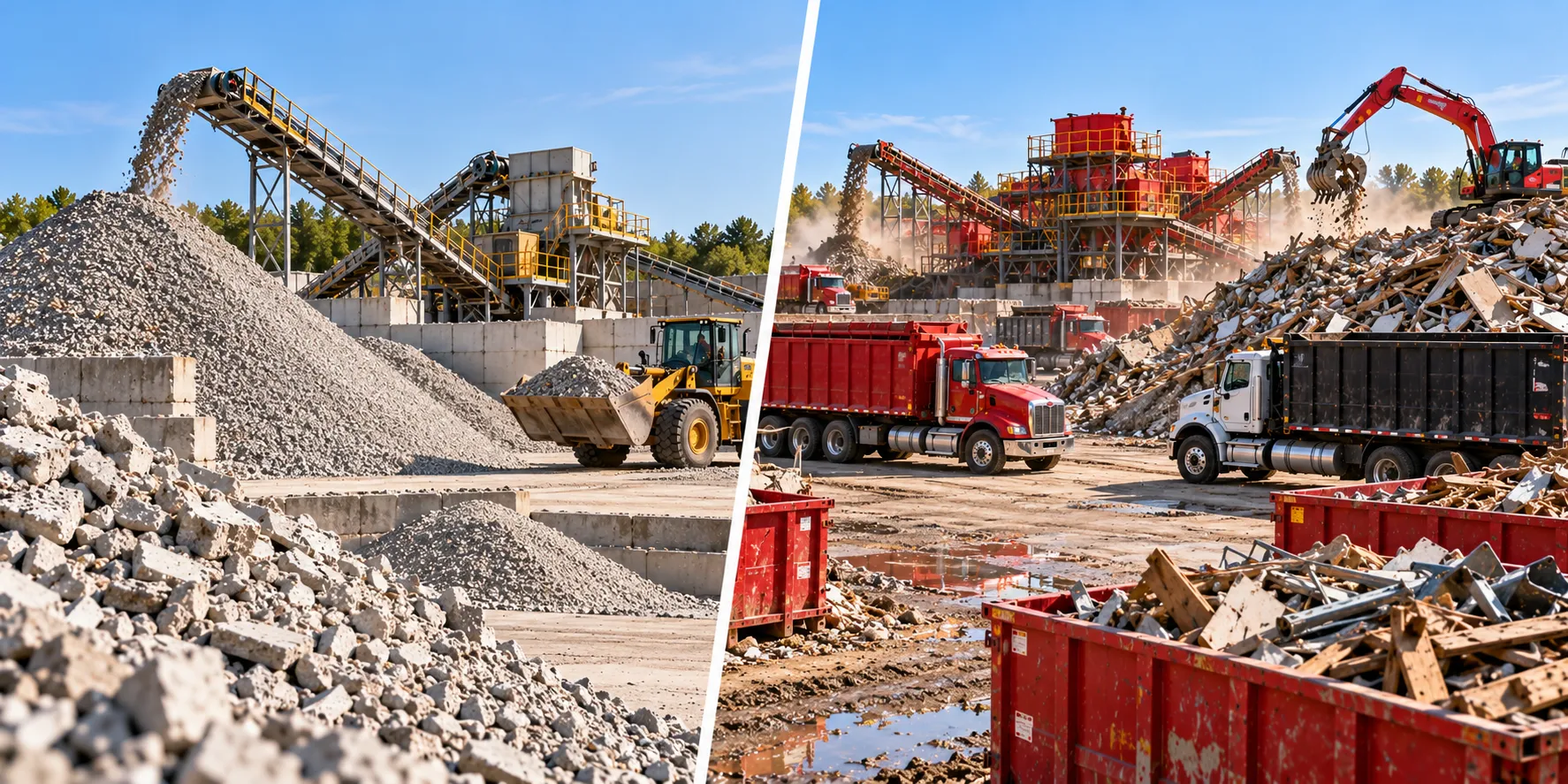
Your company may collect material from construction sites, transport it, sort it, process it, crush it, grind it, shred it, store it, or prepare it for reuse.
That material might include:
- Concrete
- Asphalt
- Metal
- Glass
- Wood
- Mixed construction debris
Some businesses also operate dumpsters or containers, process stone or concrete, handle scrap materials, or use heavy equipment to move and process construction debris.
That creates a very different risk profile than an ordinary office or retail business.
Employees work around machinery.
Trucks may be traveling between jobsites and processing facilities.
Expensive equipment may be operating throughout the day.
Third parties may enter the property.
Materials can create environmental concerns.
And one significant accident can involve employees, vehicles, equipment, property, or the environment at the same time.
That’s why insurance for a construction and demolition debris recycling company shouldn’t simply begin with:
“What’s the cheapest business insurance policy I can buy?”
The better question is:
“What can go wrong in our operation, and which insurance policies are designed to address those risks?”
What You’ll Learn
- What insurance a construction debris recycling company may need
- How general liability applies to recycling operations
- Why workers’ compensation is important
- How commercial auto fits into a C&D recycling insurance program
- What may protect crushers, grinders, shredders, and other equipment
- Why recycling businesses should understand pollution liability
- When excess liability may be appropriate
- Why subcontractors and vendors can affect your insurance program
- What underwriters may want to know about your recycling operation
- What information to prepare when requesting a recycling business insurance quote
What Is Construction and Demolition Debris Recycling Insurance?
Construction and demolition debris recycling insurance isn’t necessarily one individual insurance policy.
It’s better to think of it as an insurance program built around the specific risks of a C&D recycling business.
Depending on the operation, that program may include:
- Commercial general liability
- Workers’ compensation
- Commercial auto
- Contractors or environmental pollution liability
- Property and equipment coverage
- Inland marine
- Excess liability
- Other specialized coverages
The exact combination depends on what the business actually does.
And that’s important.
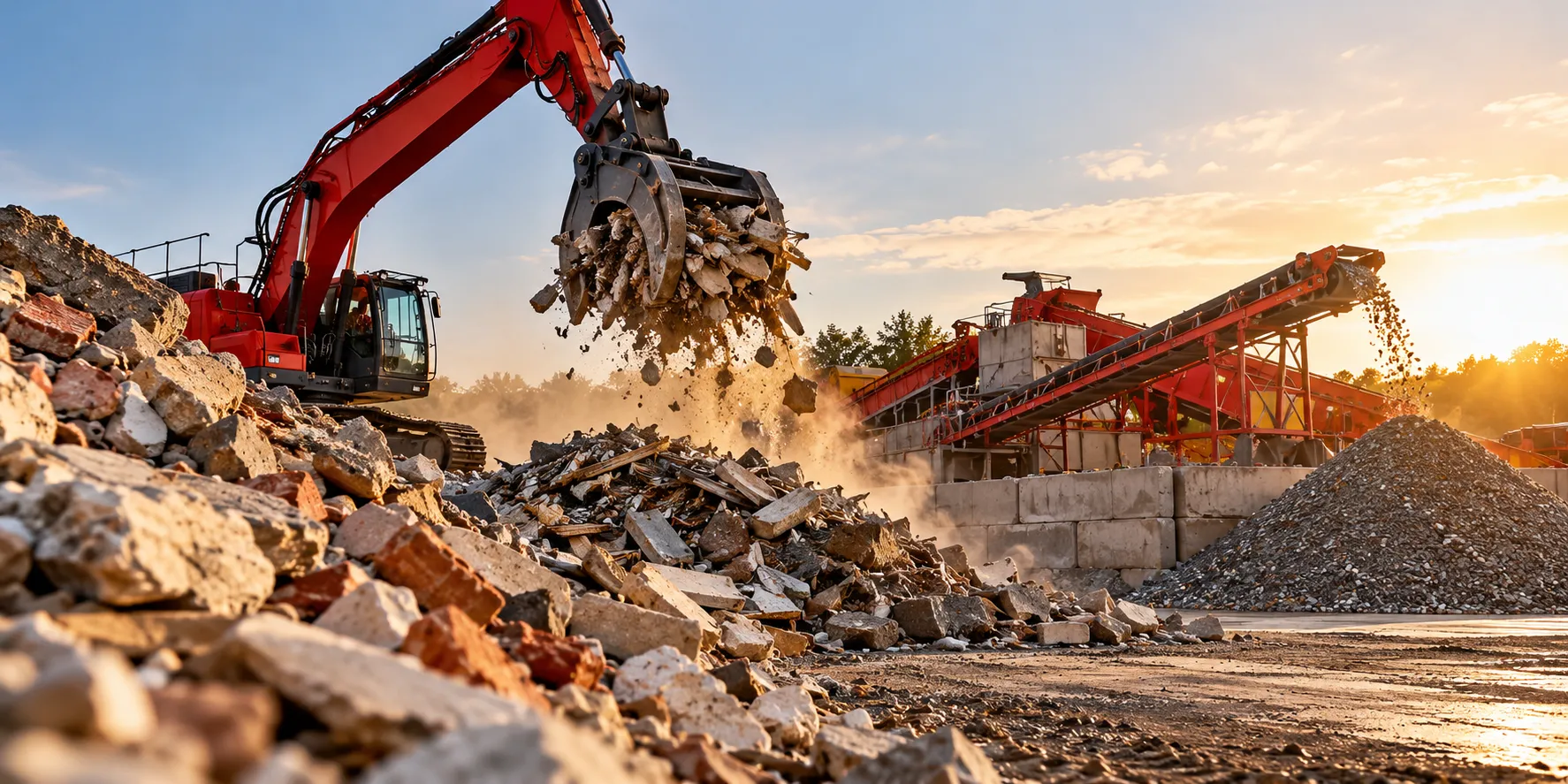
Not Every Recycling Company Is the Same
“Recycling company” can describe dramatically different businesses.
One company may primarily collect construction debris.
Another may operate a recycling yard.
Another may crush concrete and asphalt.
Another may process wood.
Another may operate dumpsters and containers.
Another may collect scrap materials.
Another may combine several of these operations.
Even two companies with similar annual revenue could have very different insurance exposures.
That’s why accurate classification and a detailed description of operations matter.
What Does C&D Mean in Recycling?
C&D commonly refers to construction and demolition.
Construction and demolition debris can include materials generated during:
- Construction
- Renovation
- Remodeling
- Demolition
- Site clearing
- Other building activities
Depending on the facility and operation, materials may be sorted, processed, crushed, ground, shredded, recovered, or prepared for reuse.
For insurance purposes, how the material is handled can be just as important as what material is handled.
1. General Liability Insurance for Construction Debris Recycling Companies
Commercial general liability is a foundational coverage for many recycling businesses.
It may address certain covered claims involving third-party bodily injury or property damage arising from the company’s operations, subject to policy terms, conditions, exclusions, and limits.
Consider the environment at a recycling facility.
You may have:
Heavy equipment moving.
Trucks entering and leaving.
Materials being unloaded.
Debris being sorted.
Equipment processing material.
Vendors entering the property.
Customers or other third parties on site.
There are many opportunities for an accident to occur.
What Could Create a Liability Claim?
Imagine a third-party driver entering your facility to unload construction debris.
An incident occurs and that person is injured.
Or equipment being operated at the facility damages someone else’s property.
Or an accident associated with your business operations causes property damage.
Those scenarios demonstrate why liability insurance matters.
But general liability isn’t necessarily designed to address every exposure faced by a recycling company.
That’s where additional coverage becomes important.
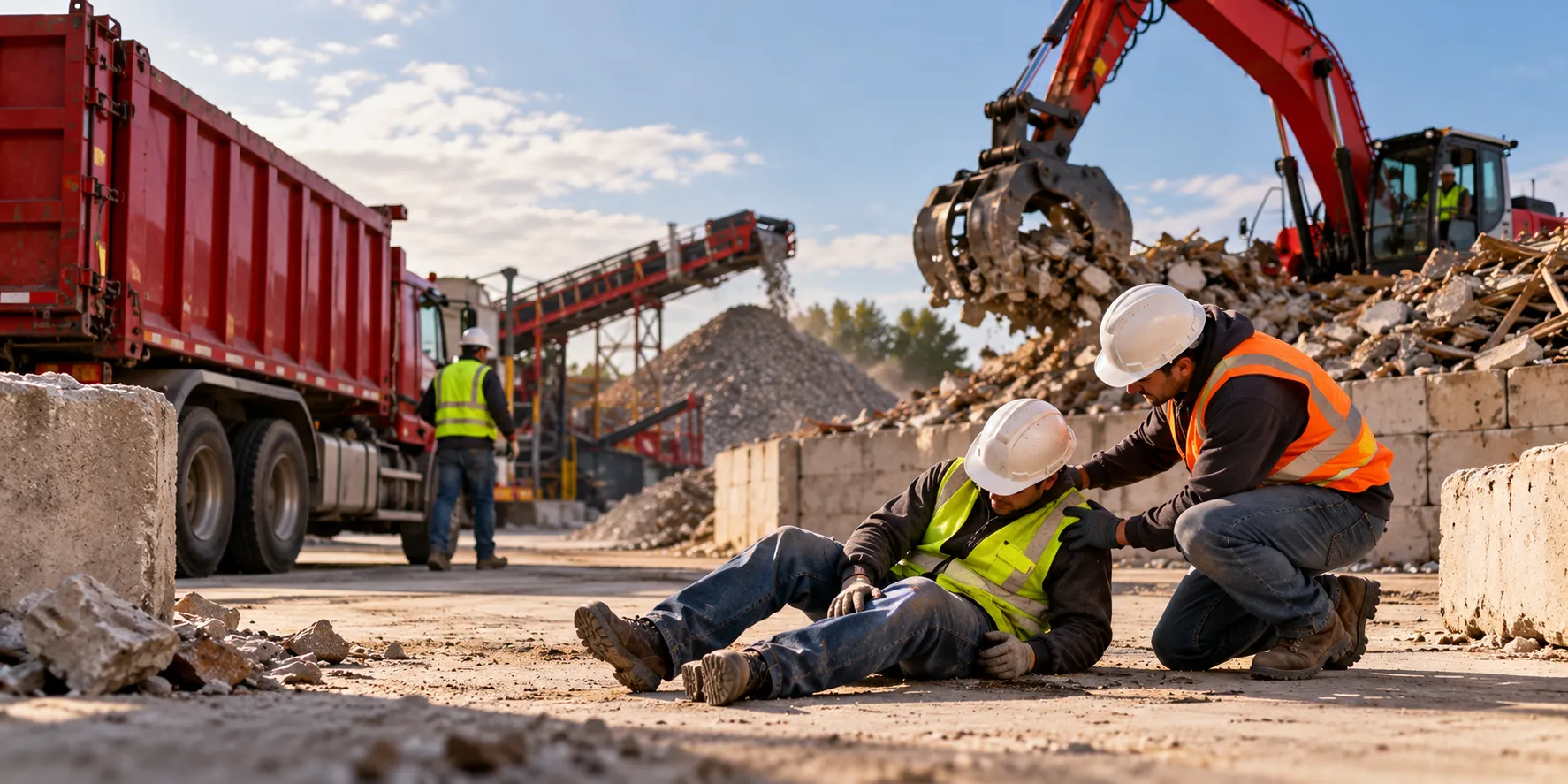
2. Workers’ Compensation Insurance for Recycling Operations
Construction debris recycling can be physically demanding work.
Employees may work around:
- Crushers
- Grinders
- Shredders
- Conveyors
- Loaders
- Forklifts
- Trucks
- Containers
- Heavy materials
- Moving equipment
Potential employee injuries can involve machinery, lifting, falls, vehicle movement, material handling, noise, dust, and other occupational exposures.
Workers’ compensation is designed to address covered work-related employee injuries and illnesses, subject to applicable law and policy terms.
Safety Matters to Underwriters
An insurance company isn’t simply evaluating the name of your business.
It’s evaluating how your business operates.
A recycling operation with documented:
Safety procedures.
Employee training.
Equipment maintenance.
Traffic controls.
Personal protective equipment.
Incident reporting.
Housekeeping procedures.
may present a very different underwriting picture than an operation without those controls.
Insurance is one part of risk management.
Preventing the loss in the first place is another.
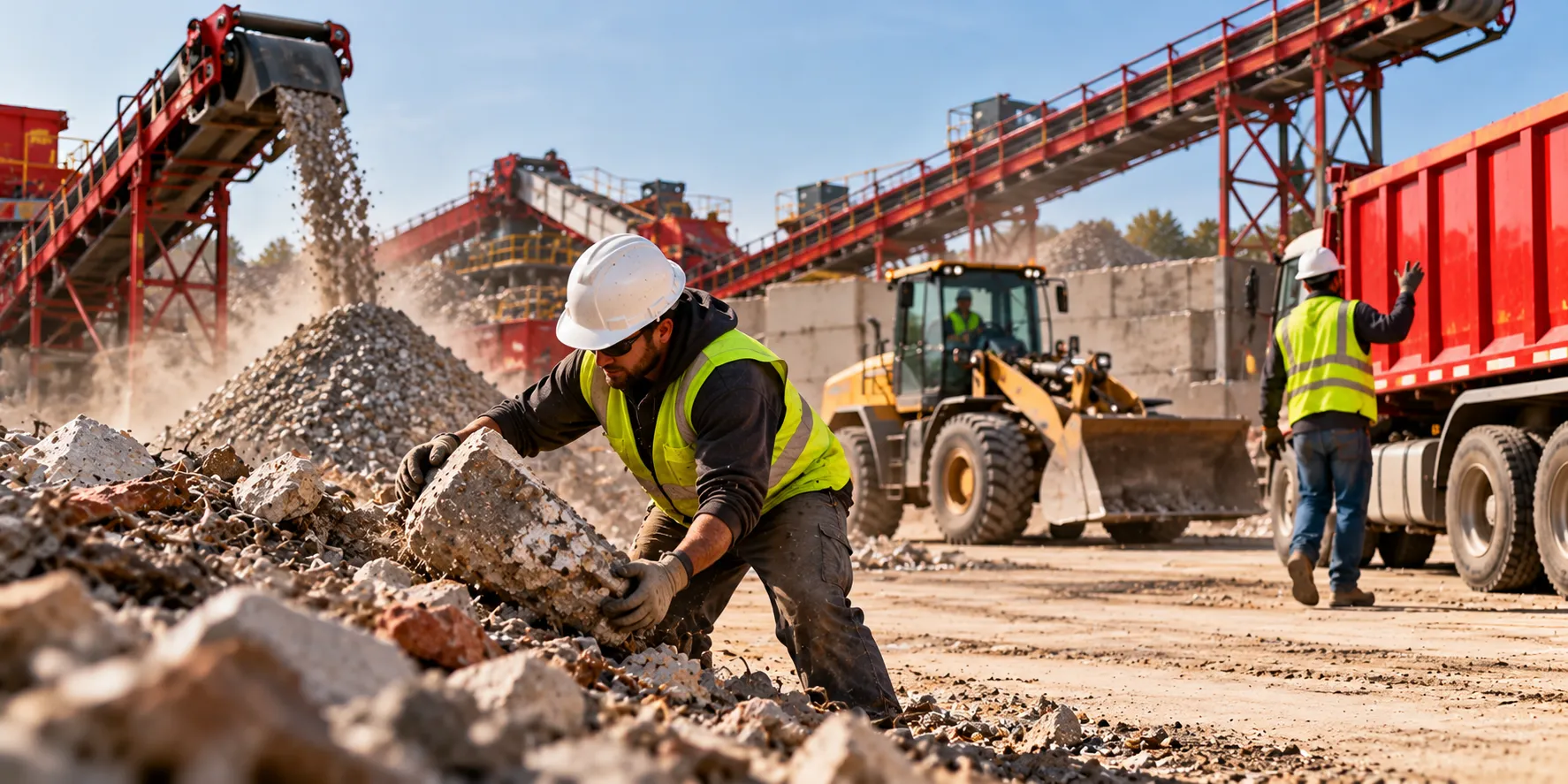
3. Commercial Auto Insurance
Transportation can be a major part of construction debris recycling.
Some businesses operate:
- Roll-off trucks
- Dump trucks
- Pickup trucks
- Service vehicles
- Container trucks
- Other commercial vehicles
That creates an exposure extending far beyond the recycling facility itself.
The Risk Travels With the Truck
Once a company vehicle leaves the yard, your business is operating on public roads.
A commercial vehicle accident can potentially involve:
- Bodily injury
- Property damage
- Multiple vehicles
- Cargo
- Company equipment
- Significant liability claims
Commercial auto insurance may therefore be an important component of a C&D recycling company’s overall insurance program.
What About Dumpsters and Containers?
Businesses that deliver and retrieve dumpsters or containers have additional considerations.
The company may be:
Delivering a container.
Picking it up.
Loading or unloading it.
Transporting debris.
Entering customer property.
Operating in active construction areas.
Each stage introduces potential exposures.
That’s why the insurance discussion should include the company’s complete operation—not simply the truck itself.

4. Property and Equipment Coverage
Think about the amount of equipment required to operate some recycling businesses.
Depending on the company, there may be:
- Crushers
- Grinders
- Shredders
- Conveyors
- Loaders
- Forklifts
- Skid steers
- Excavators
- Scales
- Processing equipment
- Generators
- Trailers
- Other machinery
That equipment can represent a substantial financial investment.
What Happens if Critical Equipment Is Damaged?
Suppose an important piece of processing equipment is damaged by a covered loss.
The concern isn’t simply:
How much does the equipment cost to repair?
There may also be an operational question:
What happens to the business while it’s unavailable?
Insurance for physical assets should be evaluated in the context of the actual operation and the potential consequences of losing important equipment.
Does General Liability Cover Your Own Equipment?
Generally, general liability and property/equipment coverage address different risks.
General liability is primarily designed to respond to certain claims against the insured business.
It doesn’t mean all of the company’s own equipment is automatically insured against loss or damage.
Recycling companies should separately evaluate coverage for their physical assets.
Inland Marine May Also Be Relevant
Some equipment moves between locations.
That’s where inland marine coverage may enter the discussion.
Depending on the business and policy, inland marine may be used to insure certain mobile equipment or property that isn’t permanently located at one premises.
The correct structure depends on the equipment, ownership, use, location, and policy.
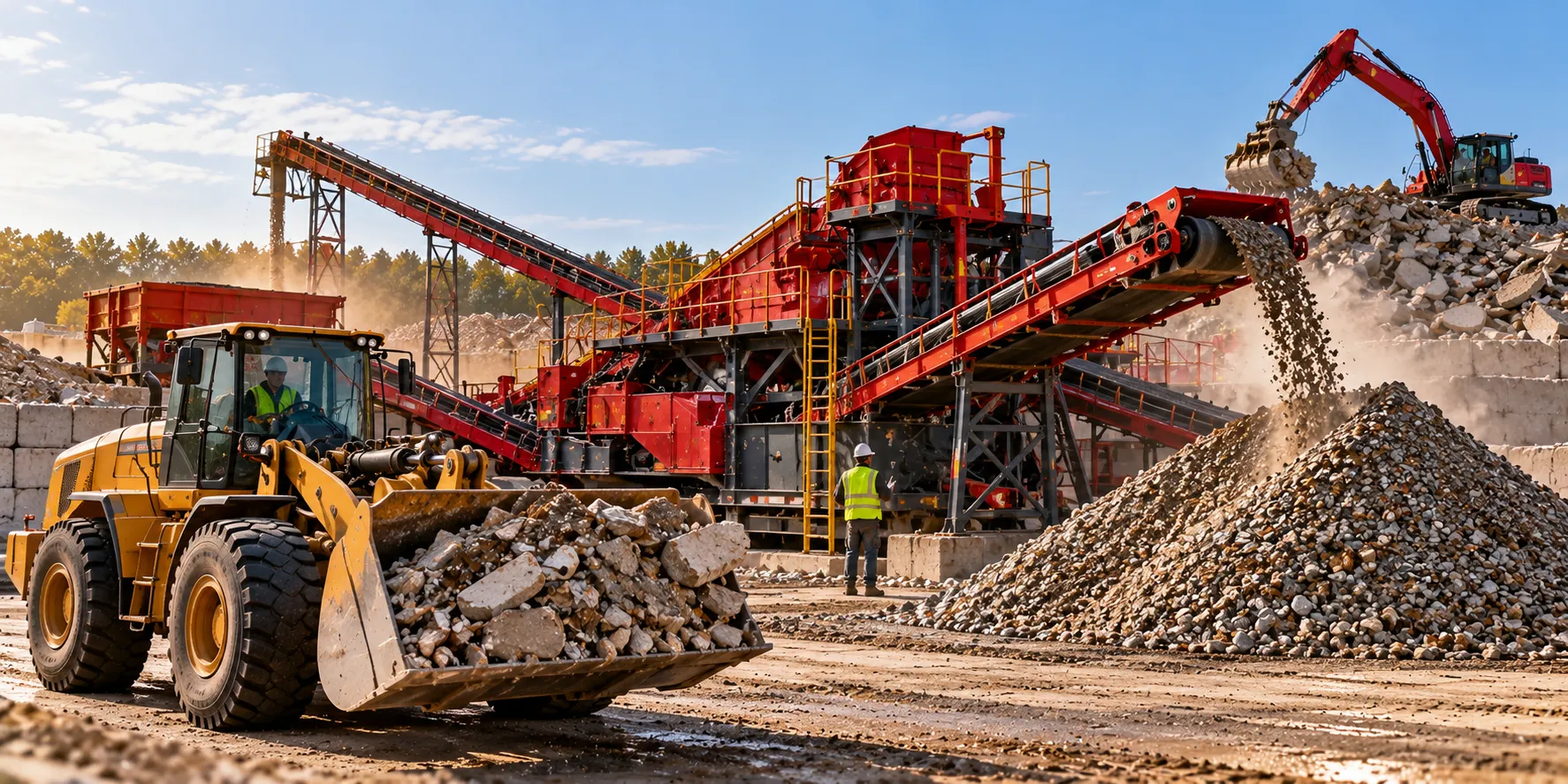
5. Pollution Liability for Recycling Companies
Pollution exposure deserves particular attention in the recycling industry.
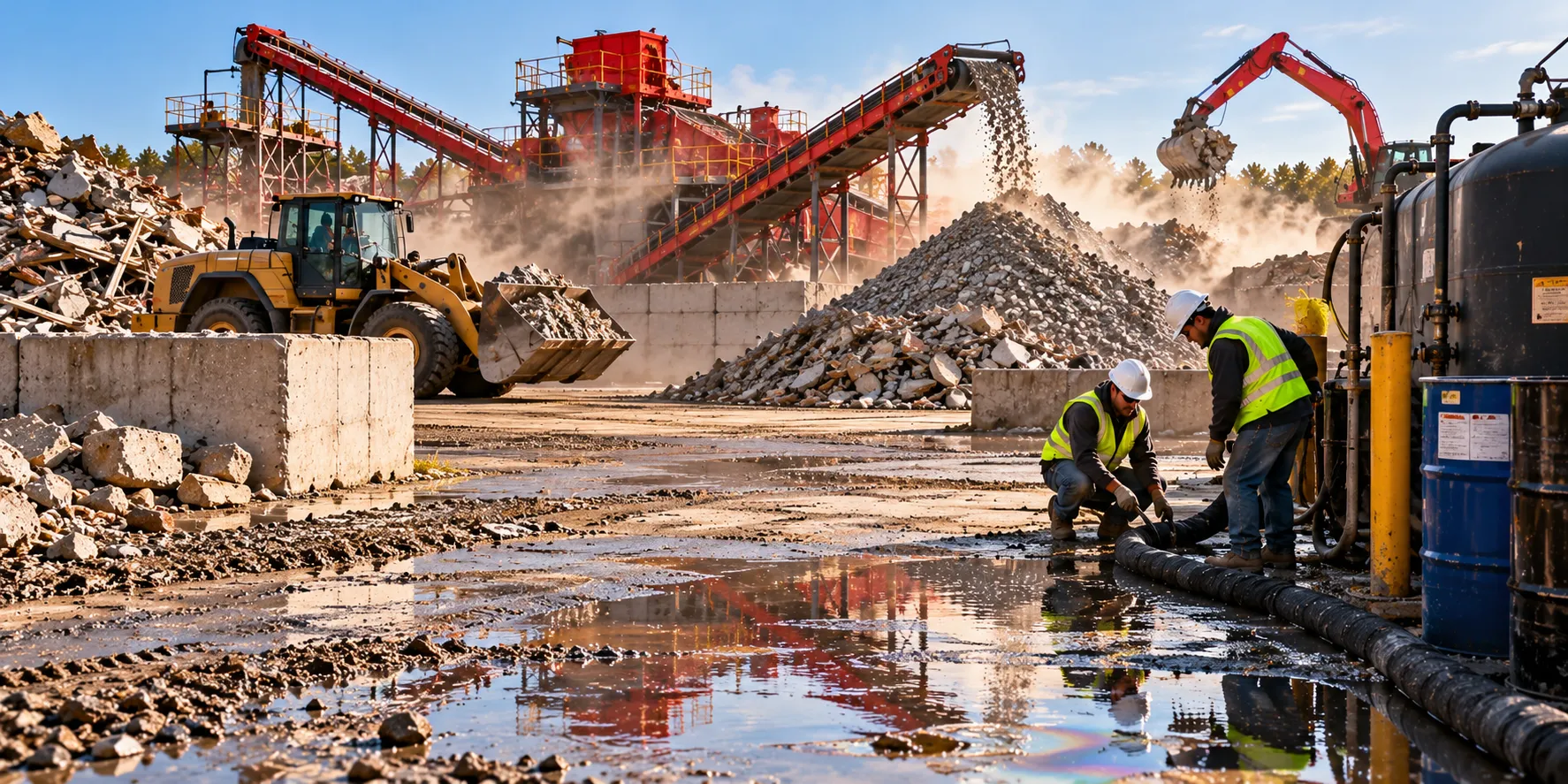
A recycling operation handles material.
That material may be stored, transported, processed, crushed, ground, or otherwise handled.
The business may also use:
- Fuels
- Oils
- Hydraulic fluids
- Other substances associated with vehicles and equipment
Depending on the operation, there may be concerns involving:
- Spills
- Runoff
- Dust
- Contamination
- Waste handling
- Material storage
- Cleanup costs
Doesn’t General Liability Cover Pollution?
Don’t assume that it does.
Commercial general liability policies can contain pollution exclusions or limitations.
Exactly what is or isn’t covered depends on the policy and circumstances.
That’s why recycling businesses should specifically discuss environmental exposures with an insurance professional.
What Is Pollution Liability Insurance?
Pollution liability insurance is designed to address certain pollution-related claims or expenses, subject to the specific policy.
Depending on coverage, that may include certain:
- Cleanup costs
- Bodily injury claims
- Property damage claims
- Pollution conditions
- Environmental exposures
The important point is that pollution risk should be evaluated intentionally.
It shouldn’t be discovered after a loss that everyone assumed another policy would cover.
C&D Recycling Can Involve Many Different Materials
This is another reason accurate underwriting is important.
A company recycling clean concrete may present a different exposure than a company handling mixed construction debris.
An underwriter may want to know:
What materials do you accept?
What materials do you reject?
How do you inspect incoming loads?
Where are materials stored?
How are materials processed?
How are waste products handled?
Do you transport material?
What equipment is used?
These details help define the risk.
6. Excess Liability Insurance
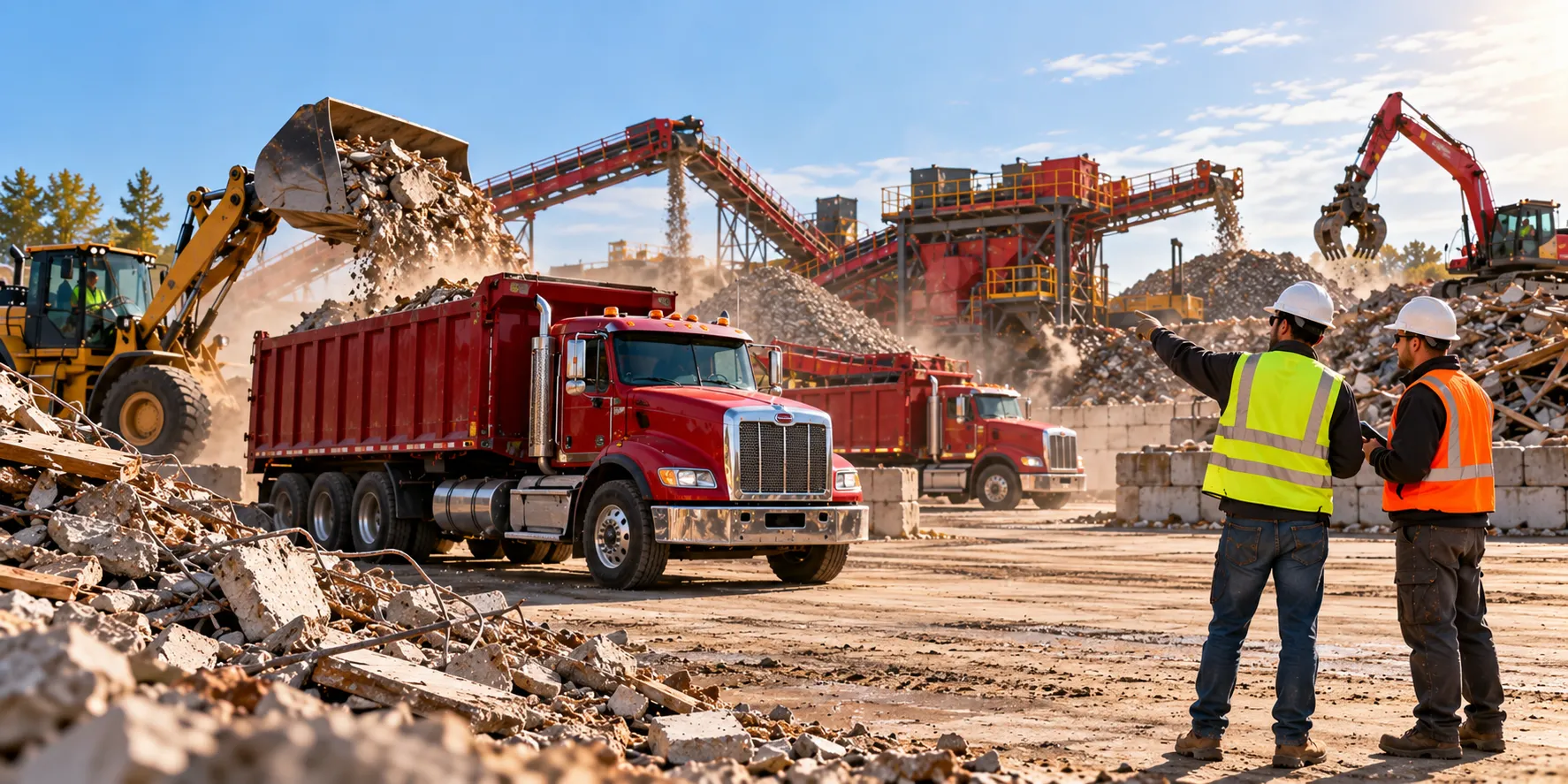
Recycling operations can create potentially significant liability exposures.
That may lead some businesses to consider limits above those provided by underlying liability policies.
Excess liability may provide additional limits over certain underlying policies, subject to its own terms, conditions, and exclusions.
Why Might a Recycling Business Need Higher Limits?
There are several possibilities.
A contract may require them.
A landlord may require them.
A customer may require them.
The size of the operation may justify evaluating them.
The company’s vehicle exposure may be significant.
The potential severity of a loss may warrant additional protection.
Insurance limits should reflect the actual business rather than an arbitrary number selected years ago and automatically renewed.
7. Other Coverages a Recycling Business May Need
Depending on the operation, additional insurance needs could include other forms of coverage.
The important thing is not to build the insurance program from a generic checklist.
Start with the business.
What does it own?
What does it operate?
Who works there?
Where does it operate?
What materials does it handle?
What contracts has it signed?
What could create a serious financial loss?
Then evaluate insurance against those exposures.
What Insurance Does a Concrete Recycling Business Need?
Concrete recycling is particularly relevant within construction and demolition recycling.
A concrete recycling company may:
- Receive demolished concrete
- Crush concrete
- Separate material
- Process aggregate
- Load material
- Store processed material
- Transport material
That can create exposures involving:
Heavy equipment.
Dust.
Vehicles.
Employees.
Third parties.
Property.
Environmental conditions.
Depending on the operation, appropriate coverage may include general liability, workers’ compensation, commercial auto, equipment/property insurance, pollution liability, and excess liability.
What Insurance Does a Construction Recycling Company Need?
A construction recycling company handling mixed C&D material may have broader exposures than a business processing only one type of material.
Mixed debris may include:
Wood.
Concrete.
Metal.
Glass.
Asphalt.
Other construction materials.
The insurer will generally want to understand what comes through the facility and how it is handled.
That’s why “construction recycling” alone may not be a sufficient description for underwriting.
What Insurance Does a Dumpster or Container Business Need?
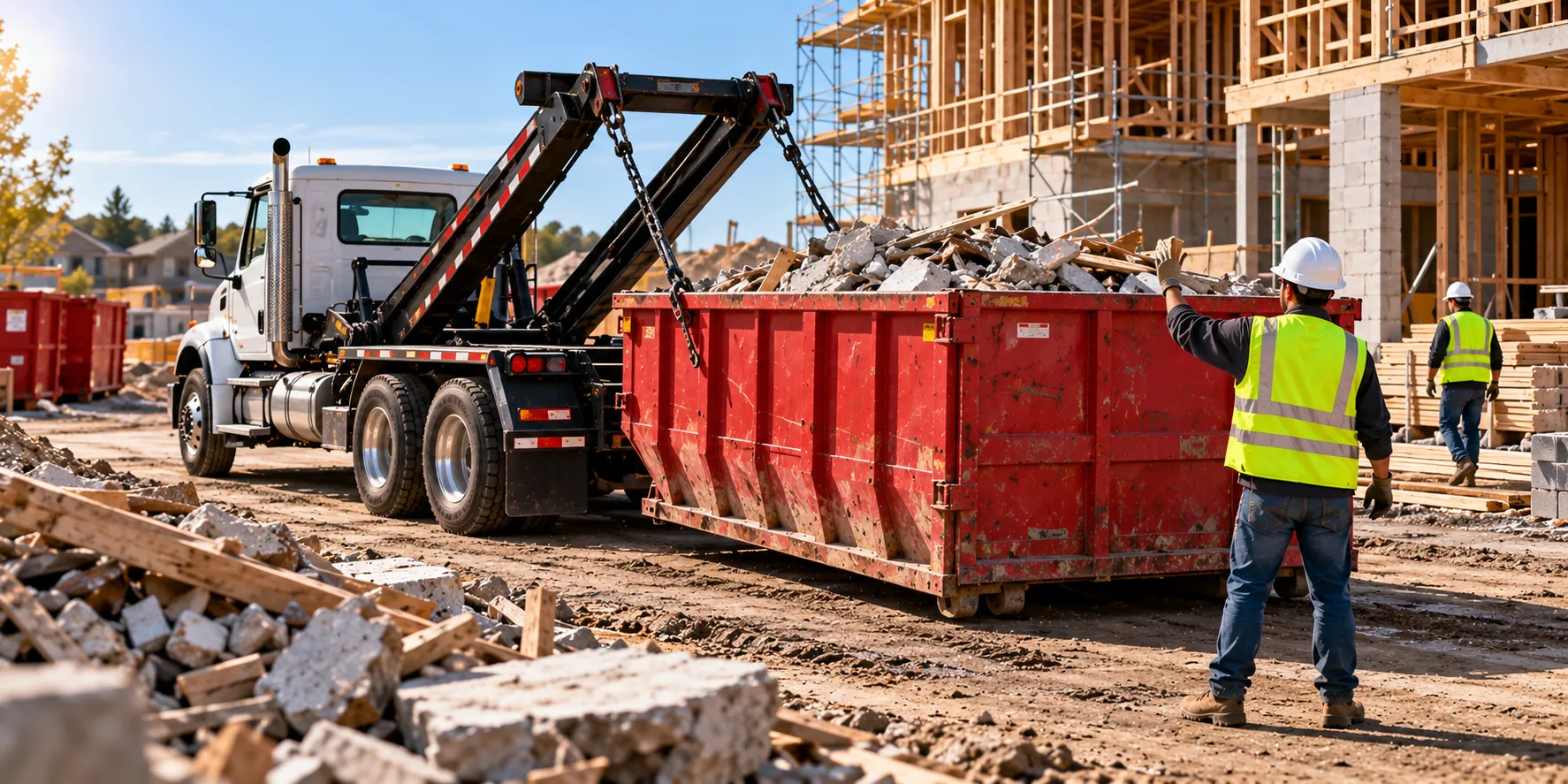
Some construction debris recycling operations also involve dumpsters, bins, or containers.
That creates another layer of exposure.
The business may own:
Containers.
Trucks.
Trailers.
Other equipment.
Employees may be delivering and retrieving containers from active jobsites.
Drivers may need to maneuver large vehicles in confined spaces.
Customers may load materials into company-owned containers.
A proper insurance review should consider the entire process.
What Insurance Does a Crushing or Grinding Operation Need?
Businesses crushing concrete, asphalt, stone, or other construction materials may operate expensive heavy equipment in environments with significant physical hazards.
Underwriters may want detailed information about:
- Materials processed
- Equipment
- Annual revenue
- Payroll
- Location
- Dust controls
- Maintenance procedures
- Employee training
- Loss history
- Transportation
- Other operations
The more specialized the operation, the more important it becomes to describe it accurately.
What Do Insurance Underwriters Want to Know About a Recycling Company?
Underwriting is essentially the process of understanding risk.
For a construction debris recycling business, an insurance company may want to know much more than annual revenue.
Materials Accepted
What comes into the facility?
Concrete?
Asphalt?
Wood?
Metal?
Glass?
Mixed construction debris?
Other materials?
Operations
What does the company actually do with the material?
Collect it?
Sort it?
Store it?
Crush it?
Grind it?
Shred it?
Transport it?
Resell it?
Equipment
What machinery is used?
What is it worth?
Who operates it?
How is it maintained?
Vehicles
How many vehicles?
What types?
How far do they travel?
Who drives them?
What are they transporting?
Employees
How many employees?
What are their duties?
What training do they receive?
Revenue and Payroll
These help the underwriter understand the size and scope of the business.
Loss History
Previous claims provide information about what has gone wrong before.
Underwriters may also want to know what corrective action was taken afterward.
Safety Program
Documented safety procedures can provide important information about how the company manages risk.
Environmental Controls
How does the company manage:
Dust?
Runoff?
Fuel?
Oil?
Waste?
Other potential environmental concerns?
The answers can be important when evaluating pollution exposure.
What Should You Prepare Before Requesting a Construction Debris Recycling Insurance Quote?
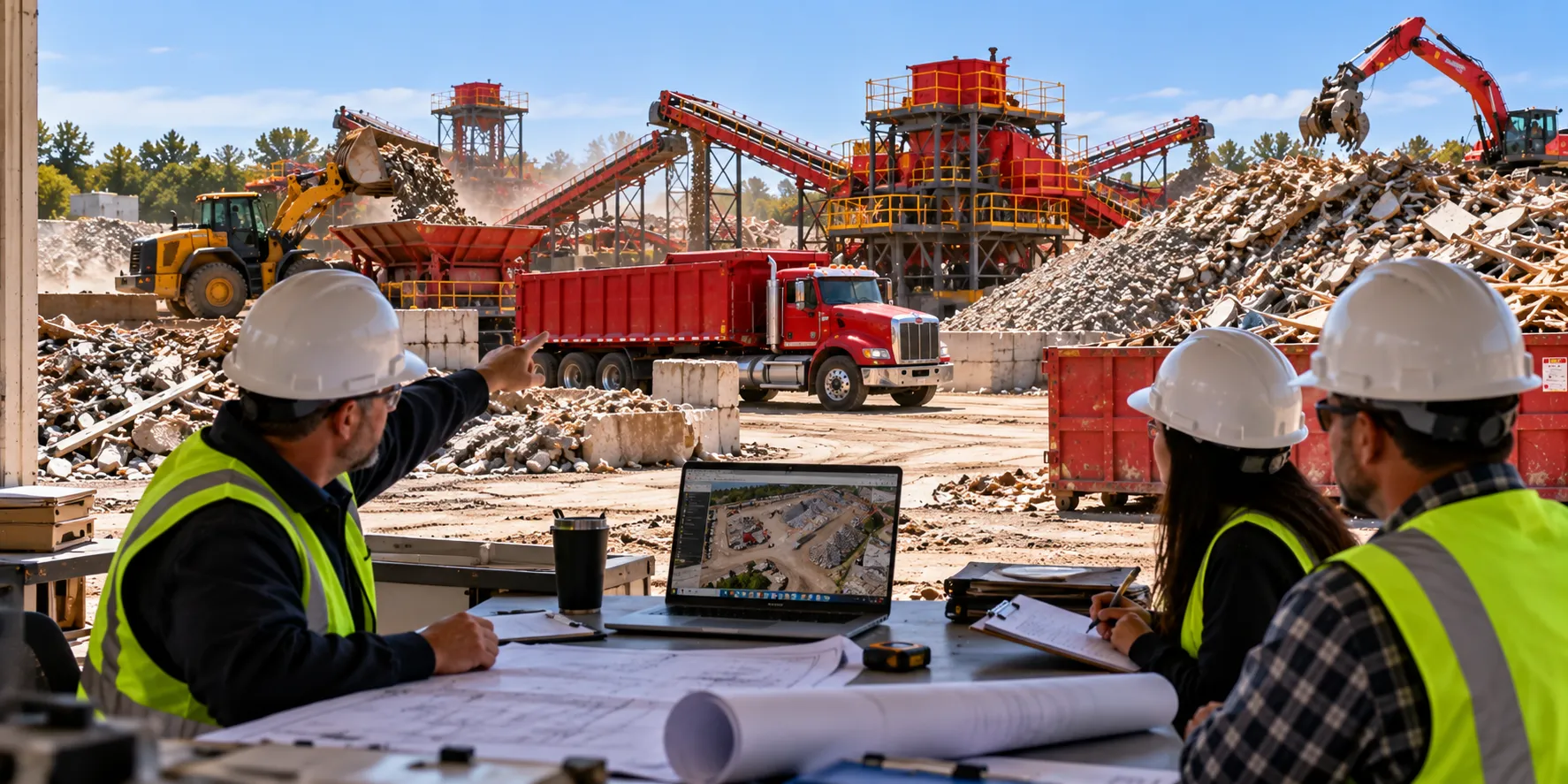
One of the best ways to improve the insurance submission process is to be prepared.
Apollo General’s current underwriting requirements for its construction and debris recycling program identify information that may include:
- Currently valued loss runs
- Supplemental and ACORD applications
- Equipment schedules
- Financial information
- Rental and work agreements
- Subcontractor contracts
- Resumes or qualifications of key personnel
- Safety information
- Workers’ compensation information
Additional information may be required depending on the risk.
Why Does the Insurance Company Need So Much Information?
Because “recycling company” doesn’t tell an underwriter enough.
Consider these two hypothetical businesses.
Company A
Receives relatively clean concrete at one facility and processes it into recycled aggregate.
Company B
Collects mixed construction debris from jobsites, operates dumpsters, transports material, processes multiple material types, owns a large vehicle fleet, and uses several types of heavy equipment.
Both businesses might describe themselves as:
Construction debris recycling companies.
But they’re not the same risk.
Detailed underwriting helps insurance companies understand the difference.
Loss Runs Are Important
Loss runs show the company’s claims history over a specified period.
Underwriters may evaluate:
- Number of claims
- Types of claims
- Severity
- Frequency
- Open claims
- Patterns
But claims history shouldn’t always be viewed without context.
If there was a significant loss, be prepared to explain:
What happened?
Why did it happen?
What changed afterward?
Corrective action can be important information.
Equipment Schedules Need to Be Accurate
If your company owns substantial equipment, maintain an accurate equipment schedule.
That may include information such as:
- Description
- Manufacturer
- Model
- Year
- Value
- Serial number or identification information
Don’t wait for a loss to discover that an important piece of equipment wasn’t properly listed or valued.
Contracts Matter Too
Recycling businesses may have contracts with:
- Customers
- General contractors
- Property owners
- Vendors
- Equipment lessors
- Subcontractors
- Other parties
Those agreements may contain insurance and indemnification requirements.
Your insurance professional should understand the contracts that affect your business.
Subcontractors Can Create Additional Risk
Does your company subcontract:
Transportation?
Hauling?
Equipment operation?
Other work?
If so, underwriters may want to understand:
- What work is subcontracted
- How much is subcontracted
- Who performs it
- What contracts are used
- What insurance subcontractors maintain
Simply transferring work to another company doesn’t necessarily transfer all of the risk.
How Much Does Construction Debris Recycling Insurance Cost?
There isn’t one standard price for C&D recycling insurance.
Pricing may be affected by factors including:
- Annual revenue
- Payroll
- Materials handled
- Processing operations
- Equipment
- Property values
- Vehicles
- Driver history
- Location
- Pollution exposure
- Claims history
- Safety practices
- Subcontracting
- Coverage limits
- Deductibles
- Contracts
A small operation processing one material is different from a large recycling company operating heavy equipment, multiple trucks, dumpsters, and mixed-material processing.
Why the Cheapest Recycling Insurance May Not Be the Best Insurance
Insurance is a business expense.
It’s reasonable to care about cost.
But reducing premium shouldn’t come at the expense of understanding coverage.
A cheaper policy may have:
Different exclusions.
Different limits.
Different deductibles.
Different classifications.
Different pollution provisions.
Different equipment coverage.
Different eligibility requirements.
Price should be evaluated alongside coverage.
Why Work With an Insurance Specialist?
Specialty industries can be difficult to explain to insurance professionals who don’t regularly work with them.
If your broker doesn’t understand the difference between:
Construction debris recycling.
Concrete crushing.
Dumpster operations.
Scrap collection.
Mixed-material processing.
and ordinary waste hauling,
it can make the insurance conversation more difficult.
A specialist can begin with a better understanding of the operation.
Apollo General Insurance and Construction & Debris Recycling Companies
Apollo General Insurance provides specialty commercial insurance programs for construction and debris recycling operations.
Apollo’s current program identifies eligible operations that may include businesses involved in collecting, grinding, shredding, or crushing materials such as:
- Concrete
- Asphalt
- Metal
- Glass
- Wood
- Mixed construction debris
Apollo also identifies certain related operations within its program appetite, subject to underwriting eligibility.
Coverage options may include general liability along with separately available policies such as:
- Excess liability
- Pollution liability
- Commercial auto
- Property and equipment
- Workers’ compensation
- Other appropriate commercial coverages
Actual availability, eligibility, pricing, terms, conditions, limitations, and exclusions depend on the individual risk and policy.
Has Your Recycling Operation Changed?
This is an important question at renewal.
Maybe you started with concrete recycling.
Now you accept additional materials.
Maybe you added:
A crusher.
A grinder.
More trucks.
Dumpsters.
Another facility.
More employees.
Different customers.
Larger contracts.
Additional hauling.
Your insurance program should reflect what the company does today, not what it did when the policy was first written.

Review Your Operations Before Your Insurance Renewal
Before renewal, ask:
Have our revenues changed significantly?
Has payroll changed?
Have we added vehicles?
Have we purchased equipment?
Are we accepting different materials?
Are we doing more hauling?
Have we added dumpsters or containers?
Have we expanded geographically?
Are we subcontracting more work?
Have customer contracts changed?
These are business changes.
But they’re also insurance changes.
A Good Insurance Submission Tells the Story of the Business
Underwriters make decisions using information.
The goal isn’t simply to submit as little information as possible and hope for a quote.
For specialized operations, a stronger approach may be to help the underwriter understand:
What the business does.
How it does it.
What controls are in place.
What the company has learned from previous losses.
How experienced the team is.
How safety is managed.
What exactly needs to be insured.
That creates a much clearer picture of the risk.
Construction Debris Recycling Insurance Should Match the Operation
There isn’t a universal insurance package for every recycling company.
A concrete crushing operation may need something different from a mixed C&D recycling facility.
A dumpster operation may have different exposures than a stationary processing facility.
A company with 20 trucks may need a different program from a company with two.
That’s why specialty commercial insurance starts with understanding the operation.
Not simply selecting a policy from a list.
Conclusion
Construction and demolition debris recycling businesses face a unique combination of exposures.
Heavy equipment.
Employees.
Vehicles.
Containers.
Material handling.
Property.
Third parties.
Environmental concerns.
Contracts.
And potentially significant liability.
A complete insurance program may therefore involve more than general liability alone.
Depending on the operation, a C&D recycling company may need to consider:
General liability.
Workers’ compensation.
Commercial auto.
Pollution liability.
Property and equipment coverage.
Inland marine.
Excess liability.
And other specialized commercial coverage.
The right combination depends on the actual business.
What materials do you accept?
What equipment do you operate?
What vehicles do you own?
Where do you work?
What contracts have you signed?
What are your largest potential losses?
Those are the questions that should drive the insurance discussion.
Apollo General Insurance has decades of experience working with specialty commercial risks, including construction and debris recycling operations.
If you’re reviewing your existing insurance program or preparing for renewal, talk with Apollo General about your operation, your exposures, and the insurance options available for your business.
Frequently Asked Questions About Construction Debris Recycling Insurance
1. What insurance does a construction debris recycling company need?
Depending on the operation, coverage may include general liability, workers’ compensation, commercial auto, pollution liability, property and equipment coverage, inland marine, and excess liability.
2. What is construction and demolition debris recycling insurance?
C&D recycling insurance generally refers to a combination of commercial insurance policies designed around the risks of collecting, processing, transporting, or recycling construction and demolition materials.
3. What does C&D mean in recycling?
C&D generally stands for construction and demolition. C&D materials may include concrete, asphalt, wood, metal, glass, and other materials generated by construction, renovation, or demolition.
4. Do recycling companies need general liability insurance?
General liability is a foundational coverage for many recycling operations because it may address certain covered third-party bodily injury and property-damage claims.
5. Do construction recycling companies need pollution insurance?
Pollution liability should be evaluated because general liability policies may contain pollution exclusions or limitations and recycling operations can involve environmental exposures.
6. What insurance does a concrete recycling company need?
Depending on its operations, a concrete recycling business may consider general liability, workers’ compensation, commercial auto, equipment/property coverage, pollution liability, and excess liability.
7. What insurance does a concrete crushing company need?
Concrete crushing operations may need coverage for liability, employees, heavy equipment, property, vehicles, environmental exposures, and other risks depending on the business.
8. What insurance does a dumpster business need?
A dumpster or container operation may need general liability, commercial auto, workers’ compensation, property/equipment coverage, and other coverage based on its operations.
9. Does general liability cover recycling equipment?
General liability generally isn’t intended to replace property or equipment insurance for the company’s own machinery. Separate coverage may be needed.
10. What insurance covers crushers, grinders, and shredders?
Depending on the equipment and operation, commercial property, equipment, or inland marine coverage may be appropriate. Policy terms and classifications should be reviewed carefully.
11. Do recycling companies need commercial auto insurance?
Businesses using company vehicles to haul debris, move containers, transport materials, or perform other business operations should evaluate commercial auto coverage.
12. Does insurance cover recycling dumpsters and containers?
Coverage may be available for eligible containers and equipment depending on the policy. Businesses should specifically identify the property they want insured.
13. What is pollution liability insurance for a recycling company?
Pollution liability is designed to address certain pollution-related exposures that may not be fully addressed by general liability, subject to policy terms and exclusions.
14. Does subcontracting affect recycling business insurance?
It can. Underwriters may consider what work is subcontracted, how much is subcontracted, the contracts used, and the insurance maintained by subcontractors.
15. What do underwriters look for when insuring a recycling company?
They may evaluate operations, materials handled, revenue, payroll, equipment, vehicles, loss history, safety procedures, environmental controls, contracts, and other risk characteristics.
16. What documents may I need for a recycling insurance quote?
Depending on the insurer, you may need applications, loss runs, equipment schedules, financial information, contracts, safety information, and details about employees, vehicles, and operations.
17. How much does construction debris recycling insurance cost?
Pricing depends on factors including the company’s size, operations, materials, equipment, vehicles, payroll, revenue, claims history, pollution exposure, and selected coverage.
18. Is C&D recycling insurance different from ordinary waste-hauling insurance?
It can be. A construction debris recycling operation may combine hauling with crushing, grinding, sorting, storage, processing, heavy equipment, and other exposures that should be accurately described to the insurer.
19. Does Apollo General insure construction and debris recycling companies?
Apollo General offers a specialty insurance program for qualifying construction and debris recycling operations. Eligibility and available coverage depend on the individual business and underwriting requirements.
20. How do I get a construction debris recycling insurance quote?
Be prepared to explain your operations in detail, including materials handled, processing methods, revenue, payroll, equipment, vehicles, loss history, safety procedures, and subcontracting. An insurance professional familiar with recycling operations can use that information to evaluate available insurance options.